
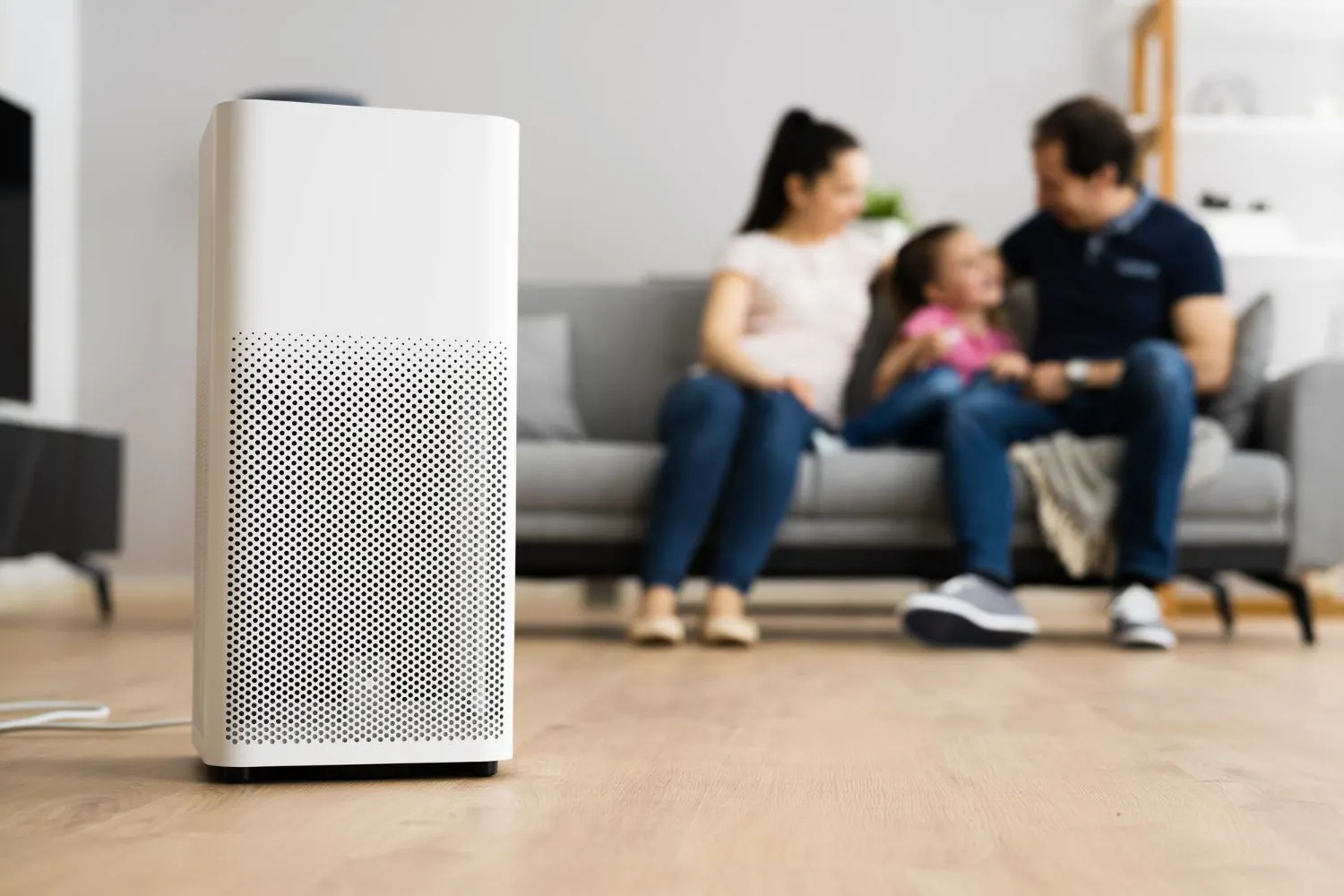
Indoor Air Quality in Boca Raton Starts With Moisture, Not Gadgets
In a climate this humid, indoor air quality problems in Boca Raton homes, from musty vents to worse allergies indoors, often trace back to moisture and to the AC system itself. Direct Cooling finds that cause first, then matches filtration, UV light or air freshening to the problem that is actually left.
- 4.9 on Google, 360+ reviews
- FL license CAC1819111
- BBB A+ accredited
If the House Smells Musty When the AC Kicks On
If a musty smell drifts out of the vents every time the system starts, and someone in the house sneezes more indoors than out, the AC is usually telling you where to look. In our humid climate the indoor coil, the drain pan and the condensate line are wet for most of the year. Wet surfaces in a dark cabinet are where mold and bacteria grow, and the blower sends that smell through every room.
EPA's guidance is blunt on two points. First, the key to mold control is moisture control: if you clean up mold but do not fix the water problem, the mold comes back. Second, portable air cleaners and furnace or HVAC filters do not solve a mold problem. They may catch some mold particles and reduce some odor, but they do not address the cause. That is why we do not start an air quality visit by selling a purifier.
If you know or suspect the HVAC system itself is contaminated with mold, EPA advises not running it, because it can spread mold through the building. Tell us that when you call, and we will look at the coil, drain pan, blower and accessible ductwork before anything else.
Musty air can also come from outside the system. Return-side gaps in the air handler closet or attic can draw damp, dusty air into the system, and a condensate line that backs up keeps the drain pan full of standing water. Fixing those is often what clears the smell for good.
Why Humidity Is the Air Quality Issue in South Florida
Allergens and odors matter, but in Palm Beach and Broward counties moisture drives most of them.
Humid air most of the year
Summer dew points around West Palm Beach average roughly 72 to 74°F from June through September (NOAA 1991-2020 hourly normals). That water ends up on your coil and in your drain pan every hour the AC runs.
The mold line
EPA advises keeping indoor relative humidity below 60%, ideally between 30% and 50%. UF/IFAS Extension warns that indoor humidity above 55% to 60% can lead to mold and bacteria growth.
Seasonal and second homes
UF/IFAS advises leaving the AC set no higher than 85°F in an unoccupied Florida home, so it keeps cycling and pulling moisture out while you are away.
A sealed house all summer
EPA notes that high temperature and humidity can raise concentrations of some indoor pollutants, and a tightly closed house gets less outdoor air to dilute them.
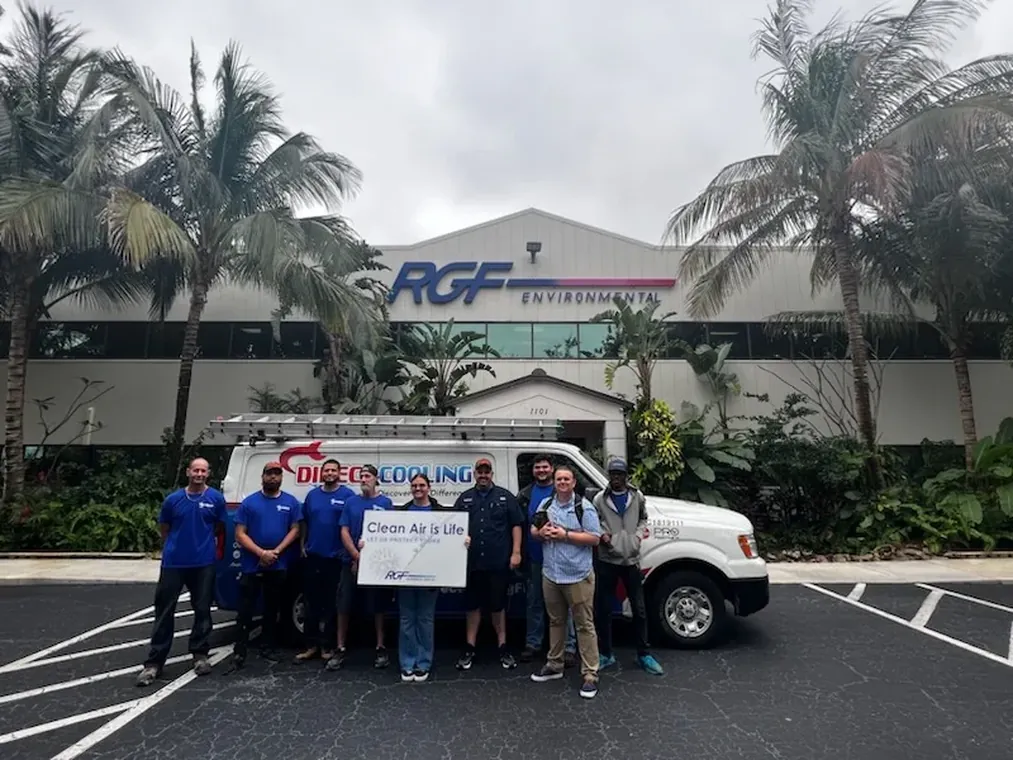
Match the Air Quality Problem to the Right Fix
Each fix solves a different problem. Most homes need one or two, not all of them, and some need a repair rather than any add-on.
| What you notice | Most likely cause | Fix that fits |
|---|---|---|
| Dust settles fast; allergies worse indoors | Low-efficiency filter, filter bypass, or return leaks pulling unfiltered air | Better filtration at the air handler and sealing the return so all air passes the filter |
| Musty smell when the AC starts | Growth on a wet coil, a dirty drain pan or a slow condensate drain | Clean and clear the coil, pan and drain; UV light at the coil to help keep it clean afterward |
| Sticky or clammy air with the AC on | Oversized system, airflow problems or duct leaks pulling in humid air | Diagnose sizing, airflow and duct leaks before adding equipment |
| Cooking, pet or closed-up house odors | Odor sources indoors plus limited fresh air | Source control and ventilation first, then an air freshening system matched to the home |
| Dust and fiberglass bits at ceiling registers | Damaged duct insulation or leaks at the boots | Duct repair or replacement; dirty-looking insulation that is wet or moldy should be replaced, not cleaned (EPA) |
What EPA Says Actually Improves Indoor Air, in Order
EPA ranks the options clearly. The most effective ways to improve indoor air are to reduce or remove the sources of pollutants and to ventilate with clean outdoor air. Filtration is a useful supplement to those two steps, not a replacement for them. That order matters, because most people spend about 90% of their time indoors, according to EPA, so the home is where most exposure to airborne pollutants happens.
There is a Florida twist that most air quality pitches leave out. EPA points out that central HVAC filters only clean the air while the system is running, and in most homes that is less than 25% of the time during heating and cooling seasons. Running the fan longer filters more air, but EPA also warns that longer run times can mean less reliable humidity control during the cooling season. In a South Florida house, where humidity is the bigger air quality risk, we weigh that trade-off with you instead of assuming more fan time is better.
On health claims, EPA is careful, and we are too. Several studies with portable HEPA air cleaners found small improvements in cardiovascular and respiratory health and in some allergy and asthma symptoms, but the improvements were not always noticeable and did not cover every symptom. Better filtration is worth doing, but no filter or purifier removes every pollutant, and none fixes a moisture problem.
So our sequence is simple. Fix the moisture and the leaks, get the drain and coil clean, upgrade the filter as far as the system allows, and only then decide whether a UV light or an air freshening system will make a real difference in your home.
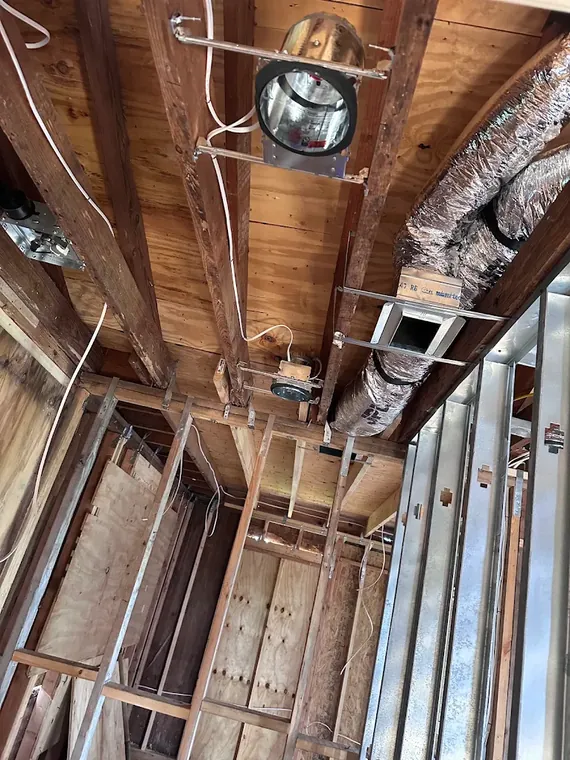
Whole Home Filtration: Reading MERV Without the Hype
The filter at your air handler is the foundation of whole-home filtration. A few facts help you pick the right one.
- What MERV meansMinimum Efficiency Reporting Value, a rating from an ASHRAE test method. EPA explains that the higher the MERV, the better the filter traps specific particle sizes.
- Why MERV 13 is the targetEPA suggests at least MERV 13, or as high as your system fan and filter slot can accommodate. Filters rated MERV 13 and above must show at least 50% removal of the smallest particles tested.
- Why higher is not automaticA denser filter can restrict airflow if the blower or filter rack was not designed for it. EPA notes you may need an HVAC technician to determine the highest efficiency your system can handle.
- The filter only works if air goes through itA loose filter, a gap around the rack or a missing filter door lets air bypass it. We check the fit, not just the rating.
- Change it on scheduleEPA notes a dirty, overloaded filter will not work well and all filters need periodic replacement per the manufacturer.
- Portable HEPA unitsEPA lists HEPA filters, common in portable air cleaners, at 99.97% or greater capture of 0.3 micron particles. EPA says to size a portable unit by its clean air delivery rate (CADR) for the room.
EPA states that no agency of the federal government has approved ozone generators for use in occupied spaces. At levels that do not exceed public health standards, ozone has little potential to remove indoor contaminants, does not effectively remove viruses, bacteria or mold, and can react with household chemicals to form formaldehyde and other irritants. EPA also notes that some ionizers, electrostatic precipitators, plasma devices and uncoated UV lamps can emit ozone. Before you buy any air purification device, from anyone including us, ask whether it produces ozone.
Ways to Cut Indoor Moisture and Allergens Yourself
These steps cost little and come straight from EPA and UF/IFAS guidance. They also make any equipment you add work better.
Safe to do yourself
- Run exhaust fansUse bathroom and kitchen exhaust fans while showering and cooking, as EPA recommends for moisture control.
- Keep the drain flowingEPA lists clean AC drip pans and unobstructed, properly flowing drain lines as a mold prevention step.
- Buy a hygrometerAn inexpensive humidity meter tells you whether the house sits above 60%, the line EPA uses.
- Dry leaks within 24 to 48 hoursEPA says drying water-damaged areas within that window helps prevent mold growth.
- Upgrade the filter carefullyMove toward MERV 13 if your system can handle it, and check that it seats snugly in the rack.
Stop and call a pro
- Humidity above 60% with the AC runningUsually sizing, airflow or a duct leak. Worth a diagnosis before buying equipment.
- Visible growth on the coil or blowerNeeds professional cleaning and a moisture fix. EPA advises against running a system you suspect is contaminated.
- Mold covering more than about 10 square feetEPA suggests professional cleanup guidance for areas that large.
What a Direct Cooling Air Quality Visit Covers
Diagnose first, sell second. Every technician is trained by Frank to find the cause before recommending a product.
Listen to the symptoms
When the smell or dust shows up, which rooms are worst, whether anyone has allergies or asthma, and whether the home sits empty part of the year.
Check the filter and rack
Rating, fit, condition and whether any air can sneak around it.
Inspect the coil, pan and drain
The wet parts of the system where growth starts, plus the condensate line that keeps the pan empty.
Look for leaks that pull in dirty air
The air handler cabinet, filter door and return, where attic or wall-cavity air can enter.
Read the humidity
Indoor relative humidity with the system running, compared with the 60% line.
Recommend in order
Repairs first, then filtration, then UV or air freshening only if the problem calls for it, with a clear reason for each.
Portable Purifier, Whole Home Filter or Coil UV: Which Does What
These three get lumped together in ads, but they treat different things.
| Portable HEPA air cleaner | Central filter at the air handler | UV-C light at the coil | |
|---|---|---|---|
| What it treats | Particles in one room | Particles in air moving through the system | Microbial growth on the coil and drain pan |
| Works when | The unit is running | The AC fan is running | Continuously, on the wet surfaces it shines on |
| Captures particles | Yes | Yes, by MERV rating | No; EPA says UV does not capture or remove particles |
| Removes gases or odors | Only with an activated carbon stage | Most residential filters are designed for particles | EPA found no evidence UV removes gaseous pollutants |
| Ozone concern | Avoid models that intentionally produce ozone | None for a standard media filter | Use coated, ozone-free lamps |
EPA does not certify or recommend specific brands or models of air filters or portable air cleaners.
Air Purification and Air Freshening Systems, Matched to the Home
We install whole-home air purification and air freshening systems that work with your existing AC, along with filtration upgrades and UV light for the coil. Because the system treats the air your air handler already moves, it reaches every room the AC serves instead of one room at a time.
Air freshening is for odors from cooking, pets or a house that has been closed up, and it works best after the source is handled. Frank will walk you through which combination makes sense for your home and why, with no pressure and no unnecessary upsells. If the honest answer is that a drain cleaning and a better filter will do the job, that is what you will hear.
Air quality work pairs naturally with regular maintenance. A clean coil, a clear drain and a fresh filter are the routine that keeps moisture and growth from coming back, and membership customers get 10% off additional AC services all year. If you want to read more about humidity specifically, Frank covers it in his humidity guide.
Where We Handle Indoor Air Quality
Air quality visits dispatch from our office in Boca Commerce Park in west Boca. Tap a pin for the city.
The interactive map is not loading right now. The areas it covers:
Indoor Air Quality Questions From Boca Raton Homeowners
 Direct CoolingFL Certified AC Contractor CAC1819111 Dispatch 24/7
Hi, this is Direct Cooling. Tap a question below for a straight answer.
Tap a question to ask
- Do air purifiers help with mold and allergies?
- They can help with allergies but they do not fix mold. EPA says several studies with portable HEPA air cleaners found improvements in some allergy and asthma symptoms, though not in every symptom. For mold, EPA is clear that air cleaners and HVAC filters do not address the cause, which is a moisture problem. Fix the moisture and clean the growth first, then filtration helps with what is left.
- What indoor humidity should I aim for in Florida?
- EPA advises keeping indoor relative humidity below 60%, ideally between 30% and 50%. UF/IFAS Extension warns that humidity above 55% to 60% can lead to mold and bacteria growth. A simple hygrometer tells you where your house sits. If it reads above 60% while the AC is running, the system's sizing, airflow or ducts are worth checking.
- Should I run my AC fan on On instead of Auto for better filtration?
- In South Florida, usually not without checking first. EPA notes that longer fan run times filter more air but can make humidity control less reliable during the cooling season. In a climate where humidity drives mold risk, that trade-off matters. We can help you weigh filtration against humidity control for your specific system.
- Will a MERV 13 filter hurt my AC?
- It depends on the system. EPA recommends at least MERV 13 or as high a rating as your system fan and filter slot can accommodate, and says you may need an HVAC technician to determine the highest efficiency that works. A filter that is too dense for the blower or filter rack can restrict airflow. Ask for the system to be checked before moving to a much higher rating.
- Do I need my air ducts cleaned for allergies?
- Not usually. EPA says duct cleaning has never been shown to actually prevent health problems, and dirt in ducts mostly sticks to duct surfaces. EPA does say ducts with substantial visible mold, vermin, or excessive dust actually blowing out of the registers need attention, and wet or moldy duct insulation should be replaced. We focus on repairing, sealing and replacing ducts, and we will tell you if a section should be replaced.
- I live in Boca part of the year. How do I keep the house from getting musty while I am gone?
- UF/IFAS advises leaving the AC set no higher than 85 degrees F while the house is empty, so it keeps cycling and removing moisture, and having the system checked a few weeks before you leave. Change the filter and make sure the condensate line is clear before you go. A clogged drain while nobody is home can mean water damage and growth by the time you return.
Musty Air or Worse Allergies at Home?
Call or text and tell us what you are noticing. We will find the moisture or leak behind it before recommending any equipment.
Related Services
UV Light Purification
UV-C lamps at the coil, explained honestly: what they do well and what they do not.
Learn moreDuctwork
Duct repair, sealing and replacement for hot rooms, high bills and attic leaks.
Learn moreAC Maintenance
Tune-ups that clear drains, clean coils and catch weak parts before July does.
Learn moreSources · page reviewed 2026-10-06
- EPA, Guide to air cleaners in the home, read 2026-10-06
- EPA, What is a MERV rating?, read 2026-10-06
- EPA, A brief guide to mold, moisture and your home, read 2026-10-06
- EPA, Introduction to indoor air quality, read 2026-10-06
- EPA, Ozone generators that are sold as air cleaners, read 2026-10-06
- EPA, Residential Air Cleaners: A Technical Summary, 3rd ed. (2018), read 2026-10-06
- EPA, Should you have the air ducts in your home cleaned?, read 2026-10-06
- UF/IFAS Extension, Preparing your home for seasonal absence (HE887), read 2026-10-06
- NOAA NCEI, 1991-2020 hourly normals, West Palm Beach Intl (dew point), read 2026-10-06
- 2019 ASHRAE Handbook, HVAC Applications, Ch. 62, UV air and surface treatment, read 2026-10-06