

AC Repair in Boca Raton, Traced From the Symptom to the Failed Part
AC repair in Boca Raton usually comes down to a short list of parts that heat, humidity and long run seasons wear out: capacitors, drain lines, coils and refrigerant joints. Below, each common symptom is matched to its likely cause, a safe check you can do, and what our technician measures before replacing anything.
- 4.9 on Google, 360+ reviews
- FL license CAC1819111
- BBB A+ accredited
AC Not Cooling, Leaking or Making Noise? Start With What You Notice
If your house is warmer every afternoon, the vents feel lukewarm, or you found water under the air handler, you do not need to know the part name to get the right repair. You need to describe the symptom accurately. A humming outdoor unit and iced copper lines are different faults with different safe first steps.
Most no-cool calls here land on the same few causes. Trane calls a failed capacitor one of the most common reasons an air conditioner malfunctions, especially in summer. A clogged condensate drain can trip a float switch that shuts the whole system down. A starved coil freezes. A slow refrigerant leak shows up as weak cooling long before it shows up as a dead system.
Find your symptom in the table below, or skip the reading: call or text (561) 210-7605 and tell us what the system is doing. Photos of the thermostat, the outdoor unit and any water help the technician arrive with the right parts.
AC Symptoms, Likely Causes and How Each One Is Confirmed
A careful diagnosis rules out the cheap, common causes with a measurement before anyone mentions expensive ones.
| What you notice | Likely causes | Safe check for you | What the technician measures |
|---|---|---|---|
| Running, but the house will not cool | Thermostat setting, clogged filter, dirty coil, low refrigerant from a leak | Set to COOL, 2 to 4 degrees below room temperature (Trane); look at the filter | Supply and return temperature split, refrigerant pressures against the manufacturer chart |
| Warm air from the vents, outdoor fan not spinning | Failed run or dual capacitor, burned contactor, failed condenser fan motor | Look through the top grille with the system running; do not touch anything inside | Capacitor tested with a meter against its rated microfarads; voltage at the contactor |
| Water on the floor, in the closet or through the ceiling | Clogged condensate line, cracked or rusted pan, missing trap | Turn the system off, check for standing water in the pan | Line cleared and flow tested; pan, trap and float switch inspected |
| Ice on the lines or the indoor coil | Restricted airflow, dirty coil, thermostat running overnight, refrigerant leak | Thermostat to OFF, fan to ON, let it thaw (American Standard) | Airflow first, then pressures and a leak search once the coil has thawed |
| Turns on and off every few minutes | Oversized system, clogged filter, thermostat placement, low charge, failing electrical part | Time a few cycles; replace a dirty filter | Run time, thermostat wiring and location, charge, capacitor and relay condition |
| Humming, buzzing, rattling or squealing | Capacitor, contactor, fan motor, loose panel or blade, compressor | Note when it happens (startup, running, shutdown) | Component tests at the noise source with the power isolated |
| Musty or burning smell | Mold on the coil or a wet filter; electrical overheating | Burning electrical or plastic smell: shut the system off | Coil, pan and drain condition; wiring and motor temperature checks |
| Breaker trips when the AC starts | Shorted compressor or fan motor, wiring fault, failing start components | Reset once after waiting five minutes (FPL); if it trips again, leave it off | Amperage and insulation readings taken safely at the unit |
AC Running but Not Cooling, or Blowing Warm Air
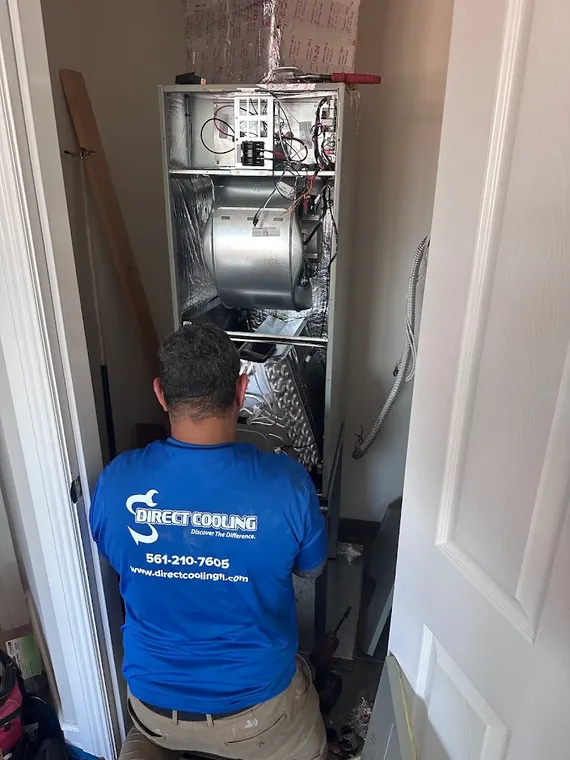
The short answer: when the indoor fan moves air but the air is not cold, the outdoor unit is usually not doing its half of the job. Either it is not running (a capacitor, contactor or fan motor problem), it cannot reject heat (a dirty condenser coil), or the system is short on refrigerant because of a leak. A clogged filter or a frozen indoor coil can produce the same feeling at the vents.
Start at the thermostat. Trane's first troubleshooting step is to confirm it is set to cool, not heat, and set 2 to 4 degrees below the room temperature. A blank screen often just means dead batteries. Then step outside while the system is calling for cooling: Trane notes the condenser fan is visible through the top of the unit, so you can see whether it is spinning without opening anything.
If the outdoor fan is still and the unit hums, the most likely culprit is the capacitor, covered in the next section. If the fan spins but the air is only slightly cool, the technician will measure the temperature drop across the indoor coil and read refrigerant pressures. Trane is blunt about refrigerant: a properly running system should not need more, and a dealer who simply tops it off without finding the leak leaves you paying for the same refill again. We find and fix the leak, or tell you plainly when it is in a coil not worth repairing.
If your system runs on R-410A, it can still be repaired. EPA states that the HFC rules do not limit the use or repair of equipment already installed. Our refrigerant guide explains what changed for new equipment in 2025 and 2026.
AC Capacitor Replacement: The Most Common Summer Repair
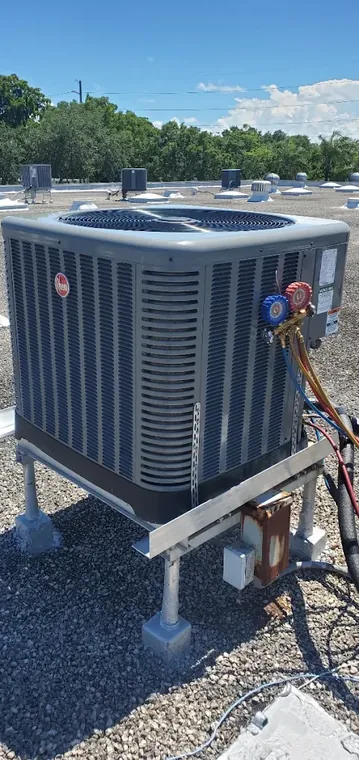
A capacitor is a small cylinder in the outdoor unit that stores electricity and releases it in a burst so the compressor and fan motors can start, then keeps current flowing while they run (Trane).
- Signs of a failing capacitorTrane lists a slow or failed start, no cold air while the system runs, a humming noise, smoke or a burning smell at the unit, and unusually high energy bills. The classic picture is an outdoor unit that hums while the fan blade sits still.
- Why they fail hereTrane names extreme heat, wear over time, short circuits, power surges and lightning strikes as causes. NWS notes Florida leads the nation in lightning casualties, and a long cooling season means more start cycles every year.
- Start, run or dualSome systems use a separate start capacitor and run capacitor; others use one dual capacitor that does both jobs. Trane notes a technician may replace two failed single capacitors with one dual unit.
- How it is testedCapacitors are rated in voltage and microfarads; Trane says most fall between 5 and 80 MFD. A technician confirms failure with a meter reading against the rating printed on the part, not by its looks alone.
- Why it is not a DIY partTrane warns that capacitors are high-voltage devices that can cause serious injury or death even with the power turned off, and that DIY repairs can void a warranty.
AC Leaking Water Inside the House
The short answer: water around an indoor air handler in Boca Raton is most often a clogged condensate drain. Carrier describes the drain line as a 3/4-inch PVC pipe that carries condensation from the evaporator coil to a drain outside. Dust and moisture form a sludge that travels into that line and blocks it, and the water backs up into the pan until it spills.
South Florida makes that water. NOAA's 1991-2020 normals for West Palm Beach put the average dew point at roughly 72 to 74°F from June through September, and every hour the system runs it pulls that moisture out of your air and sends it down the drain line.
Many systems have a safety float or sensor switch. Trane explains that when it detects rising water it shuts down the outdoor compressor, the condenser fan and the supply fan to prevent damage. That is why a clogged drain often looks like a dead AC on a hot afternoon. Trane also notes not every system has one, and that an overflow switch can be added during a repair or maintenance visit.
Carrier lists the warning signs: musty smells, water stains on ceilings or floors, weak cooling, and a system that shuts off. For attic units, water dripping from a secondary drain outlet outside is a sign the primary line is blocked. A repair visit clears the line, tests the flow with clean water, checks the pan for cracks and rust, and confirms the trap and switch work. Repeat clogs usually mean a slope, trap or pan problem worth fixing for good.
What You Can Safely Check Before a Repair Visit
These checks come from manufacturer and utility guidance and stay outside the equipment panels. If one of them fixes the problem, tell us and we will cancel the visit.
Safe to do yourself
- Thermostat mode and batteriesCOOL mode, fan on AUTO, set point below the room temperature. Trane notes someone may simply have changed the settings.
- The air filterCarrier recommends replacing filters every 1 to 3 months. A clogged filter can freeze the coil and trip the system off on overheating.
- One breaker reset, done rightFPL says to wait five minutes before resetting a tripped AC breaker, and not to reset it again if it trips a second time.
- The drain lineWith the AC off, Carrier describes pouring a cup of distilled vinegar into the indoor drain access point, or using a wet/dry vacuum at the outdoor drain exit.
- Space around the outdoor unitTrane recommends keeping landscaping and debris at least two feet away on all sides.
Stop and call a pro
- A breaker that trips twiceFPL warns this can mean a serious electrical problem. Leave it off.
- Hissing at the coil or copper linesTrane says this can be a large refrigerant leak: shut the system off. Refrigerant work requires EPA Section 608 certification.
- Anything behind a panelCapacitors and contactors carry high voltage. Even with the power off, a capacitor can hold a charge.
- A drain that clogs againRepeat clogs, rust in the pan or standing water point to a trap, slope or pan problem.
Frozen AC Coil or Ice on the Refrigerant Lines
The short answer: ice on the indoor coil or the larger copper line means the coil is running colder than freezing, almost always because too little air is crossing it or the system is low on refrigerant. American Standard's guidance is to turn cooling off at the thermostat, set the fan to ON to speed thawing, and never chip at the ice.
Plan for the water. American Standard says a coil fully encased in ice can release one to two gallons as it melts, so put towels, a tub or a tarp under an attic or closet unit. A technician cannot evaluate a coil until the ice is gone, so start the thaw before the visit.
The usual causes, in order: a clogged filter, a dirty coil (often the result of a neglected filter), blocked return grilles, a thermostat that keeps the system running through cool nights, and a refrigerant leak. American Standard notes that a coil found frozen only in the morning points at the thermostat, and that an incorrect refrigerant charge at installation can also cause freezing.
If the cause is a leak, the conversation changes. Some leaks are repaired by brazing a line; a leak inside the indoor coil may mean replacing the coil, which American Standard calls labor-intensive and worth comparing against replacing the system. We lay that decision out with the numbers, and a second opinion on a repair that size is reasonable.
AC Short Cycling: Why It Turns On and Off Every Few Minutes
American Standard puts a normal cooling cycle at roughly 10 to 20 minutes depending on the system and conditions. Cycling on and off several times within 10 minutes is short cycling, and it leaves a Florida home cool but clammy.
- Oversized equipmentA system too big for the house cools the air fast and shuts off before it removes humidity. American Standard says the installer likely skipped a Manual J load calculation.
- Airflow restrictionCarrier calls a dirty filter a leading cause: the system overheats and shuts down as a safety measure.
- Thermostat problemsA failing thermostat, or one mounted near a sunny window, a supply vent or an oven, reads the wrong temperature and sends erratic calls.
- Refrigerant or electrical faultsCarrier lists low refrigerant from a leak and faulty capacitors or relays that intermittently cut power to the compressor.
- Frozen coilAmerican Standard notes a frozen coil can also cause short cycles, so ice and cycling often appear together.
- What it costs youCarrier warns that frequent starts waste electricity, leave rooms sticky and strain the compressor and fan motors, shortening a lifespan it puts at 15 to 20 years for a healthy unit.
AC Noises and Smells, Decoded
Trane says a healthy system should neither smell nor make odd noises beyond normal humming and startup sounds. Here is what each one usually means.
| Sound or smell | Where | Likely causes | What to do |
|---|---|---|---|
| Loud humming | Outdoor unit | Capacitor, contactor or fan motor | Schedule repair; turn off if the fan is not spinning |
| Rattling with vibration | Indoor or outdoor | Blower wheel, fan blade, loose screw or bolt, unit not level | Schedule repair |
| High-pitched squeal | Outdoor unit | Loose screw, fan motor, capacitor or compressor | Turn the unit off to avoid damage, then call |
| Clicking | Indoor or outdoor | Control board, loose connection, safety switch, capacitor or contactor, thermostat | Note when it clicks: startup, shutdown or constant |
| Hissing | Indoor coil or refrigerant lines | Possible large refrigerant leak | Shut the system off and call |
| Musty, dirty-sock smell | Supply vents | Mold or mildew on the coil or in ducts; wet filter; standing water in the pan | Change a dirty or wet filter; have the coil, pan and drain checked |
| Burning electrical or plastic smell | Indoor or outdoor unit | Electrical overheating | Shut the system off and call for repair |
Trane notes a musty smell at the first cooling run of the season can fade in a day or two. If it persists or spreads through the house, turn the AC off and have it checked.
Why Boca Raton Air Conditioners Fail the Way They Do
Summer dew points in the low 70s
NOAA normals for West Palm Beach put June to September dew points at roughly 72 to 74°F. That moisture loads drains, pans and coils every hour the system runs, which is why drain calls dominate summer.
Lightning and surges
Florida leads the nation in lightning casualties (NWS), and Trane lists power surges and lightning among capacitor killers. A dead outdoor unit after a storm is often an electrical part, not a compressor.
Salt air east of I-95
Carrier notes salt can be carried up to two miles from the coast, corroding coils and fins. Homes near the Intracoastal and A1A see that wear sooner.
Homes built in the 1980s
Census ACS data put the median year built in the City of Boca Raton at 1983. Original ductwork, air handler closets and electrical service in homes that age shape what a repair involves.
Seasonal homes
A system left off or unattended for months is a common source of musty air and clogged drains on return. UF/IFAS advises clearing the condensate line before leaving.
What an AC Repair Visit in Boca Raton Looks Like
Direct Cooling is a family-run company founded in 2017 by Francisco "Frank" Rey, who worked in HVAC for more than 20 years before starting it. The company holds Florida certified air conditioning contractor license CAC1819111, and Frank trains every technician on the team to the same rule: diagnose first, sell second.
In practice that means the technician takes the reading that proves the fault (a capacitor's microfarads, a temperature split, a refrigerant pressure, an amperage draw) and shows it to you before recommending a part. You get the repair price before work starts. When a capacitor is the whole problem, you pay for a capacitor. When the system is near the end, we say so and show why: age, repair history, efficiency and refrigerant.
Most repairs do not need a permit. Palm Beach County lists repair of an existing AC system, and replacement of any part that does not alter the system listing or make it unsafe, among items that do not require one. Full equipment change-outs do, and we handle those permits ourselves.
Repairs dispatch from our office in Boca Commerce Park in west Boca, open Monday to Friday, 8 to 5. The line at (561) 210-7605 takes calls and texts and is monitored around the clock; for after-hours failures, see emergency AC repair. Direct Cooling is BBB A+ accredited and holds a 4.9 rating from more than 360 Google reviews (as of October 1, 2026).
Facing a Big Repair? Compare It Against Replacement
ENERGY STAR suggests considering replacement when an AC is more than 10 years old, needs frequent repairs, or leaves rooms too hot. This tool frames that decision; it does not make it.
A rule of thumb, not a quote. Frank checks the actual system before recommending either, and recommends the repair when the repair is the right call.
How this helper weighs your answers
It multiplies the system's age by the repair cost. Under 5,000 usually favors repairing; over 5,000 is a common point to price a replacement alongside the repair. An R-22 system adds weight toward replacement because R-22 is no longer produced, so recharging it gets harder and costlier. A large leak on an R-410A system adds some weight because new systems have moved to lower-GWP refrigerants. Two or more major repairs in two years also adds weight. None of this replaces an on-site diagnosis.
Where We Handle AC Repair
Repair calls dispatch from our office in Boca Commerce Park in west Boca. Tap a pin for the city.
The interactive map is not loading right now. The areas it covers:
AC Repair Questions We Hear in Boca Raton
 Direct CoolingFL Certified AC Contractor CAC1819111 Dispatch 24/7
 Hi, this is Direct Cooling. Tap a question below for a straight answer.
Tap a question to ask
- Why is my AC blowing warm air?
- Go outside while the system is calling for cooling and look through the top grille. A still fan with a humming unit usually means a failed capacitor or fan motor. A spinning fan with warm air at the vents points to low refrigerant, a dirty coil or a frozen indoor coil. Turn the system off if you see ice or hear grinding, because running it that way can damage the compressor.
- How do I know if my AC capacitor is bad?
- Trane lists the common signs: the AC is slow to start or will not start, no cold air while it runs, a humming noise, smoke or a burning smell at the unit, and higher energy bills. Only a meter reading compared with the microfarad rating printed on the capacitor confirms it, and that test belongs to a technician because the part can shock you even with the power off.
- Can a clogged drain line stop my AC from working?
- Yes. Carrier and Trane both note that many systems have a safety float switch that shuts the AC down when a clogged drain lets the pan fill with water. If the system stopped suddenly on a hot day and you see water in the pan, closet or attic, a clogged condensate line is the first suspect. Clearing the line usually restores cooling the same visit.
- Is it normal for my AC to turn on and off every 10 minutes?
- No. Carrier says a healthy system runs longer cycles, and American Standard defines short cycling as turning on and off several times within 10 minutes. Replace a dirty filter first. If the cycling continues, the cause is usually thermostat placement or wiring, low refrigerant, a failing electrical part, or a system that is oversized for the house.
AC Acting Up? Get It Diagnosed, Not Guessed
Call or text (561) 210-7605 and describe the symptom. We will tell you what it is likely to be and show you the reading that proves it before any part is replaced.
Related Services
Emergency AC Repair
A dispatch line monitored 24/7, plus what to do safely while you wait for the truck.
Learn moreAC Replacement
An honest repair-or-replace answer, then a clean change-out when replacement wins.
Learn moreAC Maintenance
Tune-ups that clear drains, clean coils and catch weak parts before July does.
Learn moreSources · page reviewed 2026-10-06
- Trane, AC capacitors: what they are and why they matter, read 2026-10-06
- Trane, AC fan not working, read 2026-10-06
- Trane, Why isn't my air conditioner working?, read 2026-10-06
- Trane, AC not turning on troubleshooting, read 2026-10-06
- Trane, HVAC smells and sounds explained, read 2026-10-06
- Trane, Why does my AC smell musty?, read 2026-10-06
- Trane, Air handler overflow switch, read 2026-10-06
- American Standard, Frozen evaporator coil, read 2026-10-06
- American Standard, What does cycling mean for HVAC systems?, read 2026-10-06
- Carrier, What is AC short cycling?, read 2026-10-06
- Carrier, How to clean an AC drain line, read 2026-10-06
- Carrier, Coastal heating and air, read 2026-10-06
- ENERGY STAR, When to replace heating and cooling equipment, read 2026-10-06
- FPL, Power outage guide, read 2026-10-06
- NOAA NCEI, 1991-2020 hourly normals, West Palm Beach Intl (dew point), read 2026-10-06
- National Weather Service Melbourne, Lightning information, read 2026-10-06
- UF/IFAS Extension, Preparing your home for seasonal absence (HE887), read 2026-10-06
- US Census ACS 2020-2024 5-year, median year structure built (B25035), via Census Reporter, read 2026-10-06
- EPA, Frequent questions on the phasedown of HFCs, read 2026-10-06
- EPA, Section 608 technician certification, read 2026-10-06
- Palm Beach County Building Division, when a permit is required, read 2026-10-06