
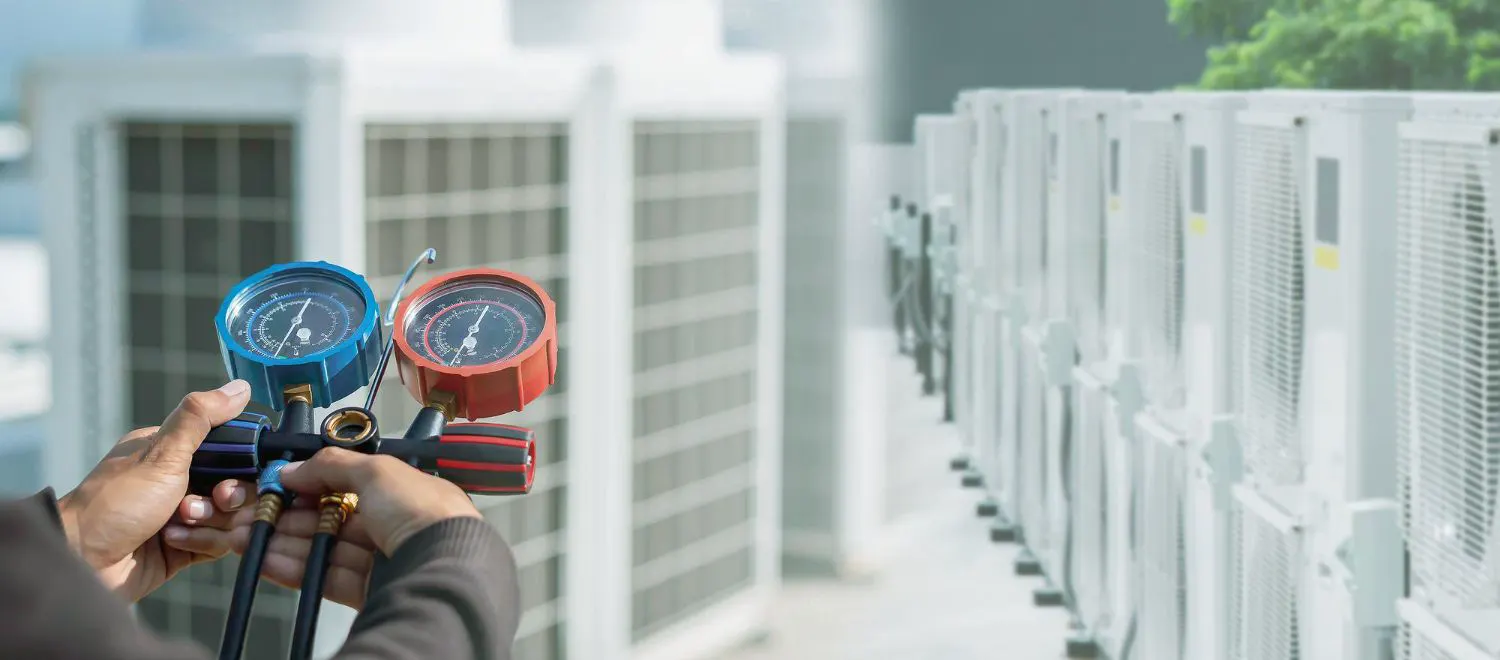
The R-410A Phase-Out Explained for Florida Homeowners
The R-410A phase-out stops new R-410A systems from being made, not your current system from running. Since January 1, 2025, new home AC and heat pump systems have had to be built for refrigerants under EPA's global warming potential limit of 700. EPA's May 21, 2026 rule removed the January 1, 2026 installation deadline, so pre-2025 R-410A inventory can be installed until it runs out, and existing R-410A systems can be repaired for their useful life.
Your R-410A system is legal to run and legal to repair. No federal rule requires you to replace a working system. If you replace the whole system, it will usually be an R-454B or R-32 system, unless the installer still has equipment built or imported before 2025. Advice online that says you must buy a new refrigerant by January 1, 2026 is out of date.
R-410A Phase-Out Timeline, From R-22 to the May 2026 Rule
Six dates explain where the rules stand today. Each one is from EPA or the Federal Register.
January 1, 2020
U.S. production and import of R-22 (HCFC-22) ends. Existing R-22 systems can keep running on recovered, reclaimed and pre-2020 refrigerant.
December 27, 2020
The American Innovation and Manufacturing (AIM) Act becomes law, requiring EPA to phase down HFC production and consumption by 85 percent from historic baseline levels by 2036.
December 26, 2023
EPA's 2023 Technology Transitions rule takes effect. It sets a GWP limit of 700 for new residential and light commercial AC and heat pump systems.
January 1, 2025
The 700 limit applies to new residential split systems, which rules out new R-410A systems. A December 2023 interim rule gave equipment manufactured or imported before this date one more year, to January 1, 2026, to be installed.
May 21, 2026
EPA finalizes a reconsideration rule that removes the January 1, 2026 installation deadline for that pre-2025 inventory and allows it to be installed until supply runs out.
July 27, 2026
The May 2026 rule takes effect (Federal Register, May 26, 2026). The 700 limit for newly manufactured systems is unchanged.
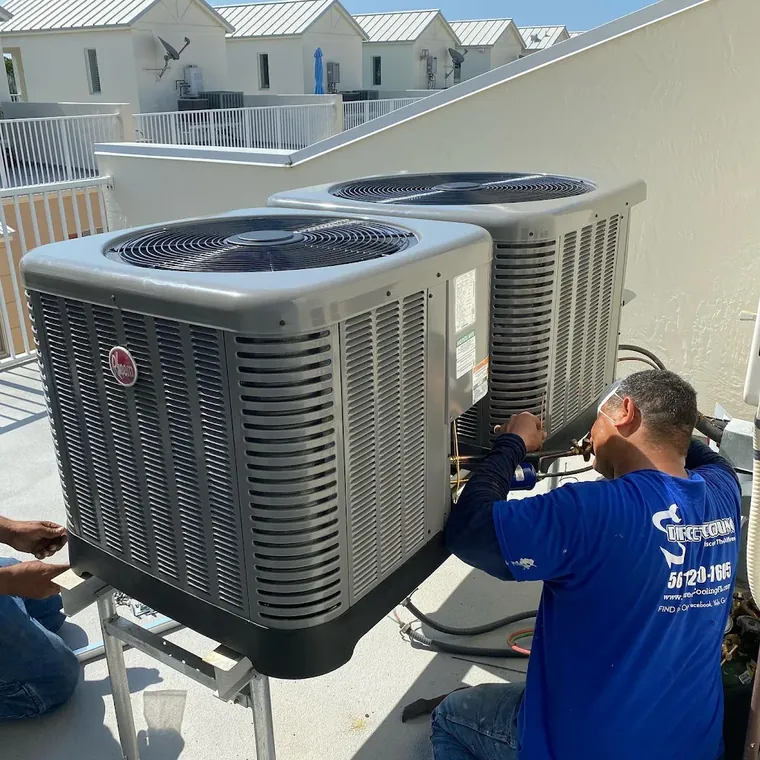
R-410A vs R-454B vs R-32: GWP and Safety Class Compared
Global warming potential (GWP) compares how much heat a gas traps with the same amount of carbon dioxide, which has a GWP of 1. EPA's limit for new home AC and heat pump systems is 700.
| Refrigerant | GWP (EPA table) | Safety class | Where you will find it |
|---|---|---|---|
| R-22 (HCFC-22) | Not an HFC: an ozone-depleting HCFC, phased out under a separate program | Not covered by these listings | Systems installed before the 2010 changeover; no new production since 2020 |
| R-410A | 2,088 | A1 | The refrigerant most home systems used for years before 2025; pre-2025 inventory still being installed |
| R-452B | 698 | A2L | Listed by EPA (SNAP) for new residential AC and heat pumps |
| R-32 | 675 | A2L | Some new systems, including some ductless mini splits |
| R-454B | 465 | A2L | New central systems from American Standard and Rheem, among others |
| R-290 (propane) | 3.3 | A3 | Allowed only in self-contained room air conditioners, not central split systems |
GWP values from EPA's Technology Transitions GWP reference table (read October 6, 2026). EPA's SNAP listing rounds R-454B to 470; the Technology Transitions table, which is the one the 700 limit uses, lists 465. The 2010 date for R-22 equipment is from American Standard's R-22 FAQ.
What EPA's May 2026 Refrigerant Rule Changed, and What It Did Not
EPA's May 21, 2026 final rule changed one thing for homeowners: the deadline to install residential and light commercial AC and heat pump equipment that uses refrigerant above the 700 limit, as long as that equipment was manufactured in or imported into the United States before January 1, 2025. That deadline had been January 1, 2026. It is now gone, and EPA's fact sheet says pre-2025 inventory can be installed until supply runs out.
EPA explained why in the rule itself. Builders and distributors reported stranded R-410A inventory, especially for new construction where equipment is ordered long before the install date. EPA also described an R-454B supply problem in 2025: there was enough refrigerant overall, but contractors in some regions had trouble getting it in service cylinders to charge new systems. The rule cites an industry distributor association (HARDI) report that A2L equipment reached 90 percent of market share by the end of the 2025 cooling season.
What did not change: new residential split systems manufactured or imported from 2025 on still have to use refrigerant under 700 GWP. The HFC production phasedown under the AIM Act continues on its schedule to 15 percent of baseline by 2036. And nothing in the rule limits using or repairing the R-410A system already in your house.
One caution about sources. EPA's own homeowner FAQ page on the HFC phasedown still carries a line saying a whole new system installed after January 1, 2026 must use lower-GWP refrigerant. That line predates the May 2026 rule. The final rule and its fact sheet are the controlling documents.
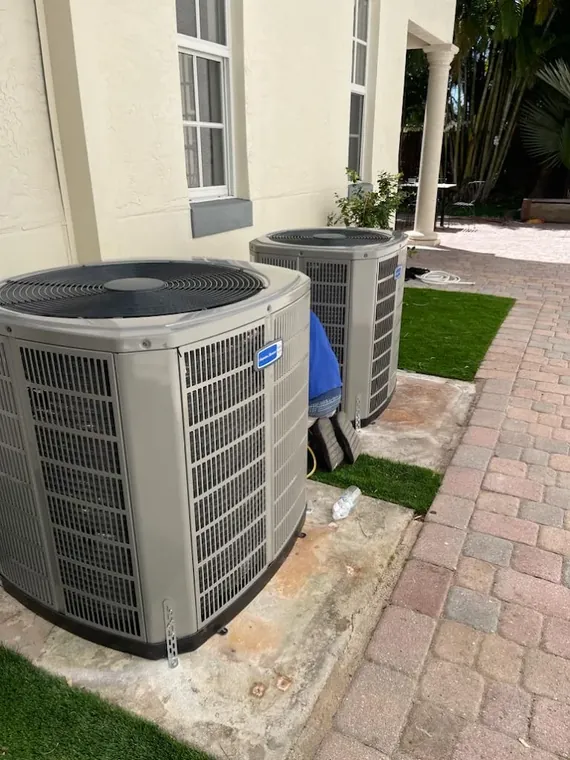
Can You Still Repair an R-410A Air Conditioner?
Yes. EPA's answer for homeowners is direct: you can maintain and repair an R-410A system throughout its useful life. These are the rules that shape a repair-or-replace decision.
- Major components can be swapped like for likeEPA says a homeowner can replace a faulty condensing unit, indoor coil or smaller part with a similar R-410A component, including a major component like the compressor.
- Service parts keep being madeEPA says R-410A components can still be manufactured and imported to keep existing systems running. Condensing units and coils made after January 1, 2025 must be labeled for servicing existing equipment only, and EPA sets no date when those service parts can no longer be sold.
- Replacing both halves makes it a new systemEPA treats replacing both the outdoor condensing unit and the indoor coil as installing a new system, even if the refrigerant lines stay. A new system must meet the 700 limit unless it is pre-2025 inventory.
- You can stage the workEPA says you can replace the condensing unit now and the indoor coil later; systems may be repaired over time. EPA lists component availability, energy efficiency and total maintenance cost as the factors to weigh.
- Supply will tightenEPA notes that HFCs and components may become less available over time as the phasedown continues. A system with a slow leak that needs a recharge every season is the case where that matters most.
- Home systems are outside the leak-repair ruleEPA's leak repair requirements that began January 1, 2026 apply to appliances with 15 pounds or more of HFC refrigerant and exclude residential and light commercial AC and heat pumps. Fixing a home leak is still the smart move, just not a federal mandate.
Repair or Replace? How the Refrigerant Rules Apply to Common Breakdowns
If your AC just failed and someone told you the refrigerant change means you have to buy a whole new system, check your situation here first.
| What happened | What the rules allow | What to weigh |
|---|---|---|
| R-410A compressor or outdoor unit failed | Replace it with an R-410A service component | Age of the indoor coil, warranty status, and how often the system has needed refrigerant |
| R-410A indoor coil is leaking | Replace the coil with an R-410A coil | Whether the outdoor unit is near the end of its life; replacing both halves later counts as a new system |
| Both halves are worn out | Install a new A2L system, or pre-2025 R-410A inventory if available | Future refrigerant availability for R-410A versus a fully current system |
| R-22 outdoor unit failed | You cannot swap in an R-410A condensing unit; the whole system is replaced and must meet the 700 limit | Most R-22 systems are old enough that replacement is the practical answer anyway |
| Someone offers to convert your system to R-454B or R-32 | Not allowed: EPA lists A2L refrigerants only for new equipment designed for them, never as a retrofit | Decline, and ask for a licensed second opinion |
Use our repair or replace helper to weigh age, repair history and efficiency together.
Are A2L Refrigerants Like R-454B Safe in a Home?
A2L is a safety classification under ASHRAE Standard 34. The A means lower toxicity. The 2L means the refrigerant can burn but has lower flammability: a maximum burning velocity of 10 centimeters per second or less, a heat of combustion under 19,000 kJ/kg, and a lower flammability limit above 0.10 kg per cubic meter. EPA dropped the term mildly flammable from its 2021 rule because it is not the ASHRAE term.
EPA approves R-454B, R-32 and four other A2L refrigerants for home AC and heat pumps only with use conditions. EPA's 2021 listing requires equipment that meets the third edition of UL Standard 60335-2-40, which covers charge size, ventilation, the space the equipment serves, and hazard markings. The refrigerants are approved only in new equipment designed and labeled for them. Permanent warning labels, in letters at least a quarter inch high, must say the system uses a flammable refrigerant and is to be repaired only by trained service personnel.
Manufacturers add leak detection on top. American Standard says its R-454B lineup includes a Refrigerant Detection System, and Rheem installs its patented PlusOne Refrigerant Detection System in the furnace coil or air handler of its low-GWP systems. That is why a new A2L system is quoted as a matched indoor and outdoor set, and why the detection system has to be wired and tested at startup.
On the refrigerant lines, EPA's 2021 rule says existing tubing can be inspected and, if suitable, reused, and the system still counts as new. Whether your line set is suitable depends on its size, condition and route. Ask the installer what they checked.
If You Still Have an R-22 Air Conditioner
If your system was installed before about 2010 and the nameplate on the outdoor unit says R-22 or HCFC-22, you are in a different situation from R-410A owners. EPA's fact sheet says no immediate change is required: you may keep using R-22 in your existing system for as long as necessary, and recovered, reclaimed and pre-2020 R-22 serves those systems.
The catch is repair. EPA says an R-22 indoor coil is not compatible with an R-410A condensing unit because of the pressure difference, and R-410A is not an approved retrofit for R-22 systems. When a major R-22 component fails, the practical result is a whole new system, and a new system has to meet the 700 limit.
Two warnings from EPA are worth repeating. Products sold as R-22a or 22a have been falsely marketed as R-22 replacements; EPA says they are hydrocarbon blends containing flammable substances such as propane and butane and are not acceptable in a home AC. And under Section 608 of the Clean Air Act it is illegal to knowingly vent refrigerant while servicing, repairing or disposing of AC equipment, so a technician should recover it, not release it.
You will still find 750 quoted as the GWP limit, including in an October 2023 Rheem article, and January 1, 2026 quoted as an installation deadline. EPA's limit is 700, and the 2026 deadline was removed by the May 2026 rule. If a quote leans on either number to push a decision, ask for the EPA source.
What the Refrigerant Change Means for a Boca Raton Homeowner
Long run hours
Palm Beach County is Climate Zone 1A, so a system here runs most of the year. A slow R-410A leak costs more over a season here than in a mild climate, and refrigerant supply is expected to tighten.
Common repairs are unaffected
A failed capacitor, contactor, fan motor or clogged drain has nothing to do with refrigerant rules. Those are ordinary repairs on any system. See AC repair.
Condos and commercial
EPA's 2026 leak repair rule covers appliances with 15 pounds or more of HFC refrigerant outside the residential and light commercial subsector, such as chillers. Building managers should check which subsector their equipment falls in.
Licensed handling
Refrigerant work belongs with a licensed contractor. Direct Cooling holds Florida certified air conditioning contractor license CAC1819111.
Questions to Ask a Contractor About Refrigerant
- Which refrigerant does this system use, and is the indoor coil or air handler new and matched to it?
- Is this new A2L equipment or pre-2025 R-410A inventory, and what does that mean for refrigerant service over the next 15 years?
- Where is the refrigerant detection system installed, and how will you test it at startup?
- Will the existing line set be reused or replaced, and what inspection supports that choice?
- Is the equipment listed to UL 60335-2-40, and does it carry the required A2L warning labels?
- If you are recommending replacement over repair, which component failed and what is the repair option?
Refrigerant Questions
 Direct CoolingFL Certified AC Contractor CAC1819111 Dispatch 24/7
 Hi, this is Direct Cooling. Tap a question below for a straight answer.
Tap a question to ask
- Do I have to replace my R-410A air conditioner?
- No. EPA says homeowners can maintain and repair R-410A systems throughout their useful life, and no federal rule requires replacing a working system. Replacement makes sense when the equipment is worn out or repairs keep stacking up, not because of the refrigerant rules alone.
- Can a contractor still install an R-410A system in 2026?
- Yes, if the equipment was manufactured in or imported into the U.S. before January 1, 2025. EPA's May 2026 rule, effective July 27, 2026, lets that inventory be installed until supply runs out. Newly manufactured systems must use refrigerant under 700 GWP.
- Can I put R-454B or R-32 in my R-410A system?
- No. EPA lists A2L refrigerants like R-454B and R-32 only for new equipment designed for them, and EPA's FAQ says SNAP rules and industry standards prohibit using them in systems not designed for them.
- How long will R-410A be available for repairs?
- EPA has not set an end date for servicing existing R-410A systems. The AIM Act phases HFC production and consumption down to 15 percent of historic baseline levels by 2036, and EPA notes HFCs and components may become less available over time, so supply is expected to shrink gradually rather than stop on a date.
- How do I know which refrigerant my AC uses?
- Look at the nameplate label on the outdoor unit. EPA notes most air conditioners have one that identifies the refrigerant along with safety and electrical ratings. Text a clear photo of it to (561) 210-7605 and we will tell you what it means for your system.
Not Sure Which Refrigerant You Have?
Text a photo of the nameplate on your outdoor unit to (561) 210-7605 and we will tell you what the rules mean for your system.
Next Steps
AC Replacement
An honest repair-or-replace answer, then a clean change-out when replacement wins.
Learn moreAC Repair
Diagnosis-first repair for AC that is not cooling, leaking, freezing up or tripping the breaker.
Learn moreAC Installation
American Standard and Rheem systems, sized for your home and installed to current code.
Learn moreSources · page reviewed 2026-10-06
- EPA, Technology Transitions final rule fact sheet (May 2026), read 2026-10-06
- Federal Register, Phasedown of HFCs: Reconsideration of Technology Transitions requirements (May 26, 2026), read 2026-10-06
- EPA, Frequent Questions on the Phasedown of HFCs, read 2026-10-06
- EPA, Technology Transitions GWP reference table, read 2026-10-06
- EPA SNAP, substitutes in residential and light commercial AC and heat pumps, read 2026-10-06
- Federal Register, SNAP listing of A2L refrigerants with use conditions (May 6, 2021), read 2026-10-06
- EPA, ER&R leak repair fact sheet (January 2026), read 2026-10-06
- EPA, Residential air conditioning and the phaseout of HCFC-22 (fact sheet, February 2020), read 2026-10-06
- American Standard, Air conditioners (R-22 phase-out FAQ), read 2026-10-06
- American Standard, Next generation refrigerant, read 2026-10-06
- Rheem, 2026 Endeavor Line heat pump and AC comparison brochure, read 2026-10-06
- Rheem, What to know about the 2025 HVAC refrigerant change (October 2023), read 2026-10-06
- 2023 Florida Building Code, Energy Conservation, Chapter 4, read 2026-10-06