
That last step matters. A 2004 field study reported in a U.S. Department of Energy guideline found that 72% of 4,168 home air conditioners had the wrong refrigerant charge and 44% had improper airflow [1]. The data is about two decades old, and the guideline doesn't say where those systems were, so read it as a field pattern rather than a Florida rate. The lesson still travels: an AC that runs without cooling needs a diagnosis, not a quick top-off.
Local conditions raise the stakes. West Palm Beach averages 74 days a year at 90 degrees or hotter, and 88% of them fall between June and September (our calculation from NOAA's 1991-2020 climate normals) [2]. Half of Boca Raton's housing units were built in 1983 or earlier [3]. This guide covers what most troubleshooting pages skip: the checks that are safe to do yourself, the "fix" that often doesn't last, and the local numbers behind a house that won't cool below 78.
Key takeaways
- Six safe checks rule out the simple causes of an AC running but not cooling before you call anyone.
- Inside fan on, outside unit silent or humming: the problem is usually electrical, and it's a job for a licensed technician.
- A refrigerant top-off without a leak search treats the symptom, not the cause: in DOE-reported field data, most tested systems had the wrong refrigerant charge.
- On the hottest Boca Raton afternoons a plateau around 78 can be normal; the symptom table below sorts normal from not.
- Call or text Direct Cooling at (561) 210-7605. The dispatch line is monitored 24/7.
What should I check first when my AC is running but not cooling?
Start with six checks that need no tools and no open panels: the thermostat, the air filter, the breaker, the outdoor unit, the condensate drain area and the vents. Together they rule out the simple causes of an AC that runs without cooling. If all six look right and the house is still warming up, the fault is inside the equipment and needs a licensed technician.
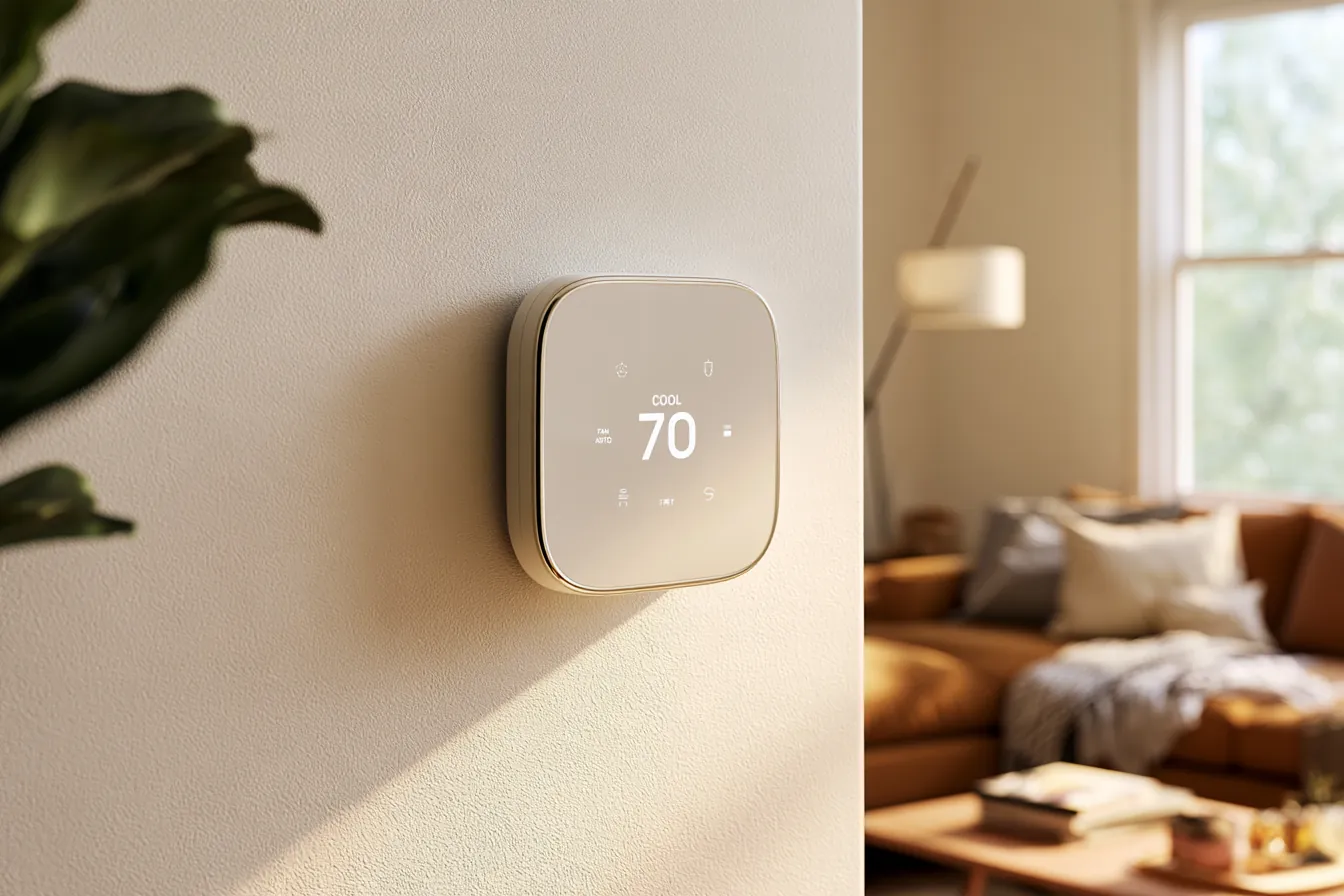
- Thermostat set to Cool and Auto. Confirm the mode is Cool and the setpoint is below room temperature. Trane suggests 2 to 4 degrees below room temperature when you test [4]. Put the fan on Auto: Florida Power & Light explains that ON runs the fan even when the AC isn't cooling [5]. A blank display may just need new batteries [6].
- A clean air filter. The Department of Energy says a clogged filter restricts airflow and reduces the system's ability to cool [6]. ENERGY STAR recommends inspecting, cleaning or changing filters once a month [7].
- The breaker, checked once. Look for a tripped AC or air handler breaker. Trane's homeowner guidance is blunt: "Don't flip the breaker." Trane explains that the breaker may have tripped because of a serious problem in the system [8]. If you do reset it, do it once. A breaker that trips again is telling you to stop.
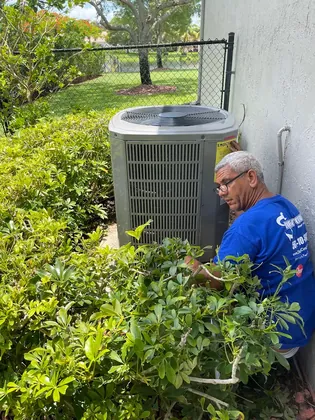
- The outdoor unit running and clear. Outside, you should hear the compressor and see the top fan spinning. With the system off at the thermostat, pull away leaves, grass clippings and plants crowding the unit. Don't open the cabinet or reach inside it.
- The condensate drain area dry. Look, don't dismantle: check the pan under the indoor unit and the drain line's outdoor end. ENERGY STAR notes that a plugged drain can cause water damage and affect indoor humidity [7].
- Supply vents and return grilles open. Open supply vents and clear the return grilles. FPL advises keeping vents open, because closing them makes the system work harder [5].
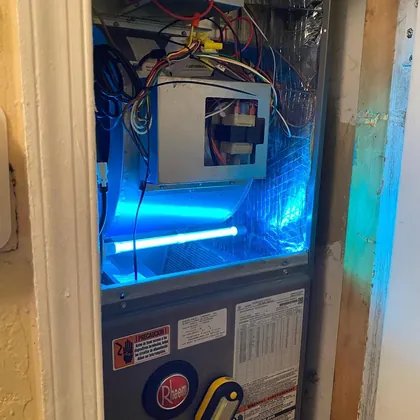
If the AC is still running but not cooling after those six checks, stop there. What's left sits behind panels or inside sealed refrigerant lines. Note what you saw (thermostat reading, outdoor fan, humming, ice, water) for the technician.
Why is the inside fan running but the outside AC unit is off?
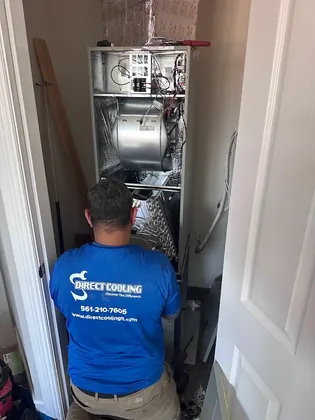
When the indoor blower runs but the outdoor unit stays silent, the outdoor half of the system either isn't getting power or can't start. The usual causes are a tripped breaker, a failed run capacitor, or worn compressor and fan controls. All of them involve high voltage, so a homeowner's job is to observe and report, not to open the outdoor unit [8][9].
A run capacitor is a metal cylinder that supplies the power to start and run the AC's motors. Trane lists a unit that won't start, a low humming sound, or a system that shuts down or stops blowing cold air as signs of a faulty run capacitor. Because capacitors carry an electrical charge, Trane is direct: "Do not attempt to replace the run capacitor yourself." [9]
Controls fail too: the Department of Energy notes that compressor and fan controls wear out when a system cycles too often, and says to have a professional check the connections [6].
One common belief is wrong: that a clogged drain leaves the blower running. Trane describes its condensate overflow switch differently: it shuts down the outdoor compressor and condenser fan and the supply fan too [10]. So an indoor fan that keeps running while the outdoor unit sits silent points to the electrical side first. A system that went completely quiet points to the drain.
> Outdoor unit silent, humming or tripping the breaker? Turn the system off at the thermostat and call or text Direct Cooling at (561) 210-7605. The dispatch line is monitored 24/7. We're a Florida Certified Air Conditioning Contractor (CAC1819111) based in Boca Raton, and we diagnose first. More on our AC repair in Boca Raton page.
Why is my AC blowing air that isn't cold?
Air that moves but isn't cold usually means the indoor coil can't absorb heat from the house. A frequent reason is a frozen evaporator coil, which American Standard says is most often caused by improper airflow; low refrigerant can freeze a coil too. A frozen coil needs the system turned off at the thermostat with the fan left on, so the ice melts before a technician checks it [11].
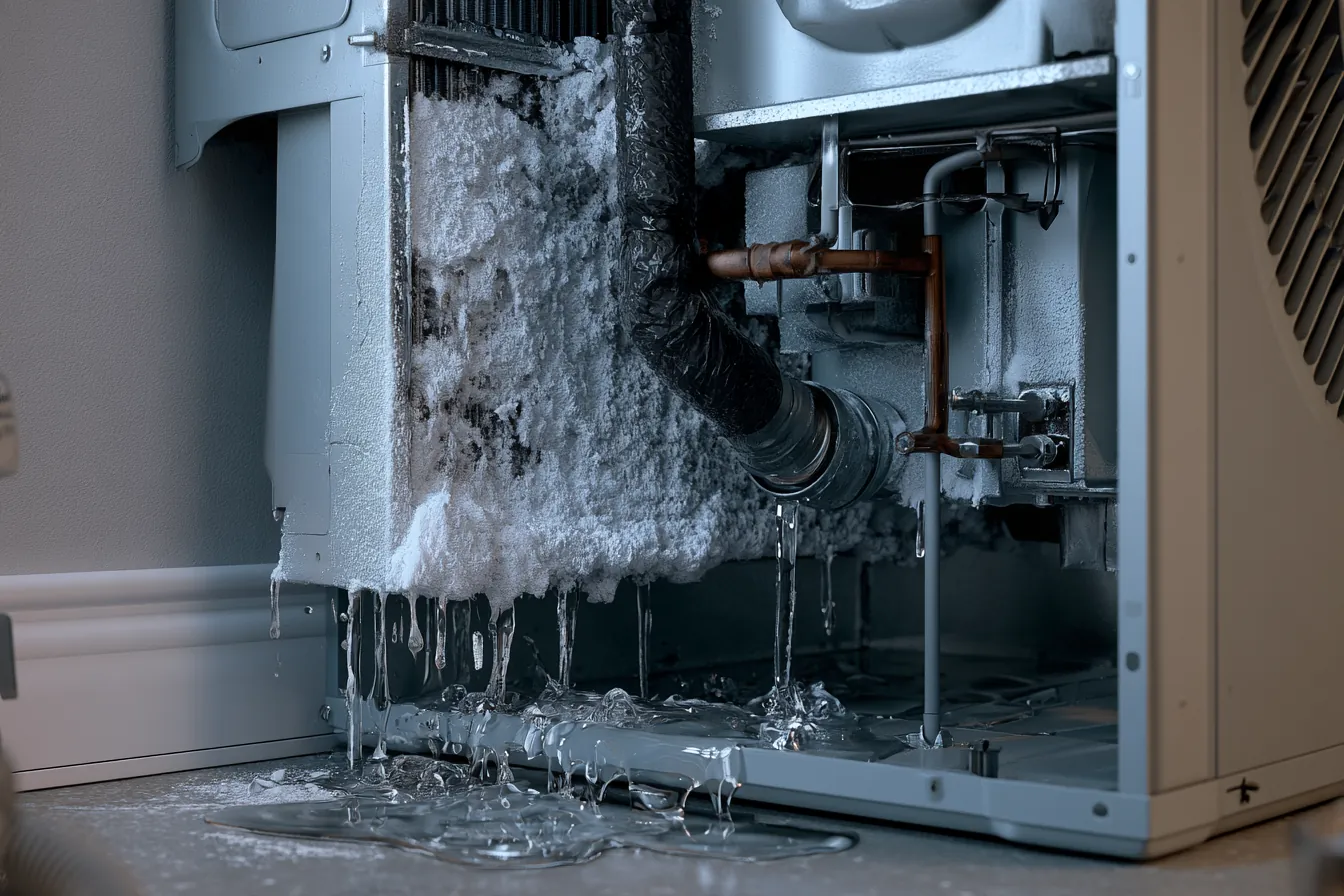
The evaporator coil is the indoor coil that pulls heat and moisture out of the air. The DOE measure guideline on AC diagnostics puts a number on it: airflow below 200 cubic feet per minute (cfm) per ton of cooling can lead to icing of the indoor coil and can shorten equipment life [1].
Signs include ice on the coil or refrigerant lines, warm air and puddles under the air handler. American Standard's homeowner steps [11]:
- Turn cooling off at the thermostat. "Running the AC unit or heat pump with a frozen coil can do major damage to the system."
- Set the fan to ON to speed the thaw.
- Don't chip at the ice. American Standard puts that warning in capital letters.
- Expect water. A coil fully encased in ice can release 1 to 2 gallons as it melts, so protect the floor under the air handler.
- Check the filter, replace it if it's dirty, then call for service.
A technician can't evaluate the coil until the ice is gone [11].
Can low refrigerant make my AC run without cooling?
Yes. Refrigerant charge is the amount of refrigerant sealed inside the system, and a system that is low can't move enough heat outdoors, so it runs without cooling. Refrigerant isn't used up like fuel. Trane says a properly running air conditioner shouldn't need refrigerant replaced, so a low charge means a leak that a technician has to find and repair [4].
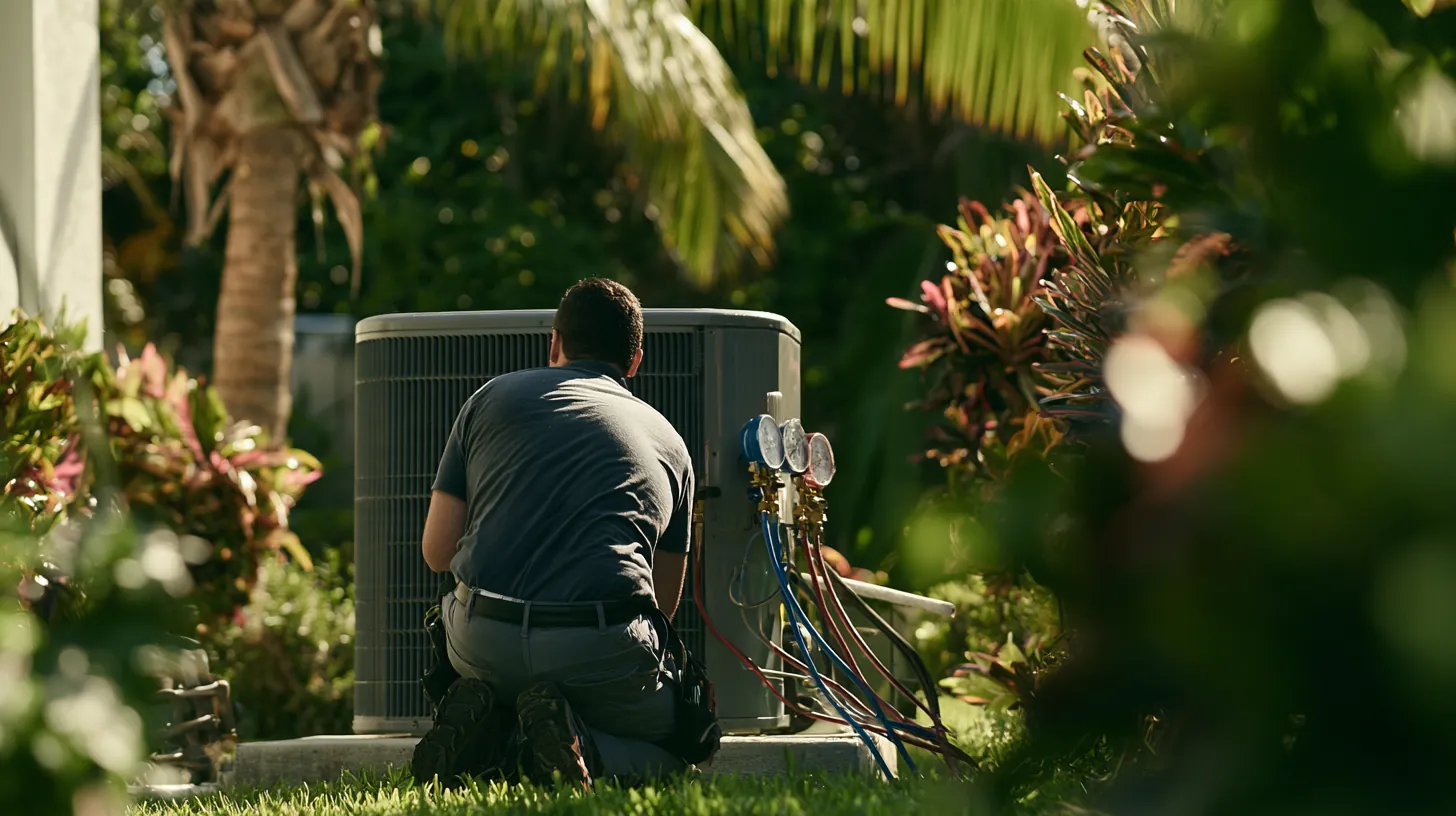
The Department of Energy gives homeowners the same order of operations: if refrigerant is low or leaking, call a trained technician to repair the leak and recharge the system [6]. Adding refrigerant without finding the leak treats the symptom.
Refrigerant work is licensed, regulated work. EPA regulations under Section 608 of the Clean Air Act require technicians who maintain, service, repair or dispose of equipment that could release ozone-depleting refrigerants to be certified [12]. Never buy a can of refrigerant or open a refrigerant port yourself.
If your system uses R-410A, you may wonder whether newer federal rules mean you must replace it. They don't. The EPA's answer to "Can I repair my existing residential air conditioning?" is direct: "Yes, you can continue to repair your existing refrigeration, air conditioning, and heat pump system." That includes major parts such as a compressor or condensing unit [13]. Separately, the EPA's leak-repair requirements that began January 1, 2026 do not cover residential air conditioners and heat pumps [14]. So no federal rule forces a leak search on a home system, which is exactly why you should ask for one. Our refrigerant changes guide explains the newer A2L refrigerants.
Why do some AC repairs not fix the cooling problem?
Many AC repairs fail because they treat the symptom instead of measuring the cause. A field study reported in a Department of Energy guideline found that 72% of 4,168 home air conditioners had improper refrigerant charge and 44% had improper airflow. A system that gets a refrigerant top-off with no leak search and no airflow check keeps the fault that caused the problem [1].
It also reports earlier California testing of more than 4,000 systems: about 34% were undercharged, 28% were overcharged and only 38% had the correct charge [1]. Overcharging is a failure too: adding refrigerant a system doesn't need lowers its efficiency [1].
The guideline also explains that a system with the correct charge at high outdoor temperatures (95 degrees or higher) can show a false undercharge when it's checked on a cooler day [1]. It also says a "temperature split" reading, the difference between the air entering and leaving the indoor coil, should be confirmed with refrigerant charge tests, because a normal split can still show up on an overcharged system [1].
Before you approve "just add refrigerant," ask three questions. Where is the leak, and will it be repaired? Was airflow checked, including the filter, the blower and the coil? Was the charge measured using the manufacturer's method for that day's outdoor temperature? A technician who can answer all three has diagnosed the problem. That's the standard Direct Cooling works to: diagnose first, sell second.
One honest limit: these DOE-reported studies were published in 1998 and 2004. The 1998 study tested California systems, and the guideline doesn't give a location for the 2004 one. They show how often mis-charged and under-aired systems turn up in field testing, not a Florida rate.
Why won't my AC cool below 78 on a hot Boca Raton afternoon?
An AC that holds 78 but won't go lower on a 90-degree Boca Raton afternoon is working against heavy heat and humidity, and on peak days that plateau can be normal for how the system was sized. If it can't hold 78 at all, or the plateau is new, look for a dirty coil, leaky ducts or a refrigerant problem. ENERGY STAR notes that dirty coils reduce a system's ability to cool [7].
The local numbers explain the strain. NOAA's 1991-2020 normals for West Palm Beach International Airport average 74.1 days a year at or above 90 degrees: 12.0 in June, 20.8 in July, 21.8 in August and 10.6 in September [2]. That's 65.2 days, 88% of the year's total, packed into four months (our calculation from the NOAA file). August's average dew point there is 74.3 degrees [2], so much of your AC's effort goes into pulling moisture from the air.
Whether 78 is your system's normal ceiling depends on how it was sized for your house. The 2023 Florida Building Code requires heating and cooling equipment to be sized with ACCA Manual S, based on loads calculated with ACCA Manual J [15]. For settings, FPL suggests 75 to 78 degrees when you're home and about 82 when you're away [5].
ENERGY STAR estimates that 20 to 30 percent of the air moving through a typical home's ducts is lost through leaks, holes and poor connections [16]. In Florida attics it's worse: Florida Solar Energy Center researchers found that a 15% return leak pulling 120-degree attic air can cut a cooling system's effective capacity and efficiency by about 50% [17]. Our ductwork page covers testing and sealing.
Short cycling is the opposite symptom. Carrier says cycling every 10 minutes or less is not normal and lists dirty filters, thermostat problems, low refrigerant and an oversized unit as common causes [18]. Our post on how humidity affects comfort covers the clammy side of that problem.
| What you notice | Likely cause | Safe homeowner step | Who fixes it |
|---|---|---|---|
| Holds 78 on a 90-plus afternoon, cools fine by evening | Peak-day load; possibly normal for how the system was sized | Keep doors closed, fan on Auto, filter clean | A load check if the plateau is new |
| Can't get below 80 or 82 at any time of day | Dirty coil, refrigerant leak or duct leak | Six safe checks, then call | Licensed technician |
| Runs in short bursts, house feels clammy | Short cycling: filter, thermostat, refrigerant or oversizing | Check the filter and thermostat | Licensed technician |
| Inside fan on, outside unit silent or humming | Breaker, run capacitor or controls | Check the breaker once; don't open the unit | Licensed technician |
| Ice on lines or coil, water under the air handler | Frozen evaporator coil | Cooling off, fan ON, don't chip ice | Licensed technician after the thaw |
| Whole system off, water in the drain pan | Clogged drain tripped the float switch | Look only, then call | Licensed technician |
Can a clogged drain line make my AC stop cooling?
Yes. A float switch is a safety switch in the drain pan or drain line that rises with backed-up water and shuts the system off before water overflows. Carrier explains that when a clog fills the drain pan, the float switch shuts the system down completely to prevent water damage. The AC stops cooling until the clog is cleared and the switch resets [19].
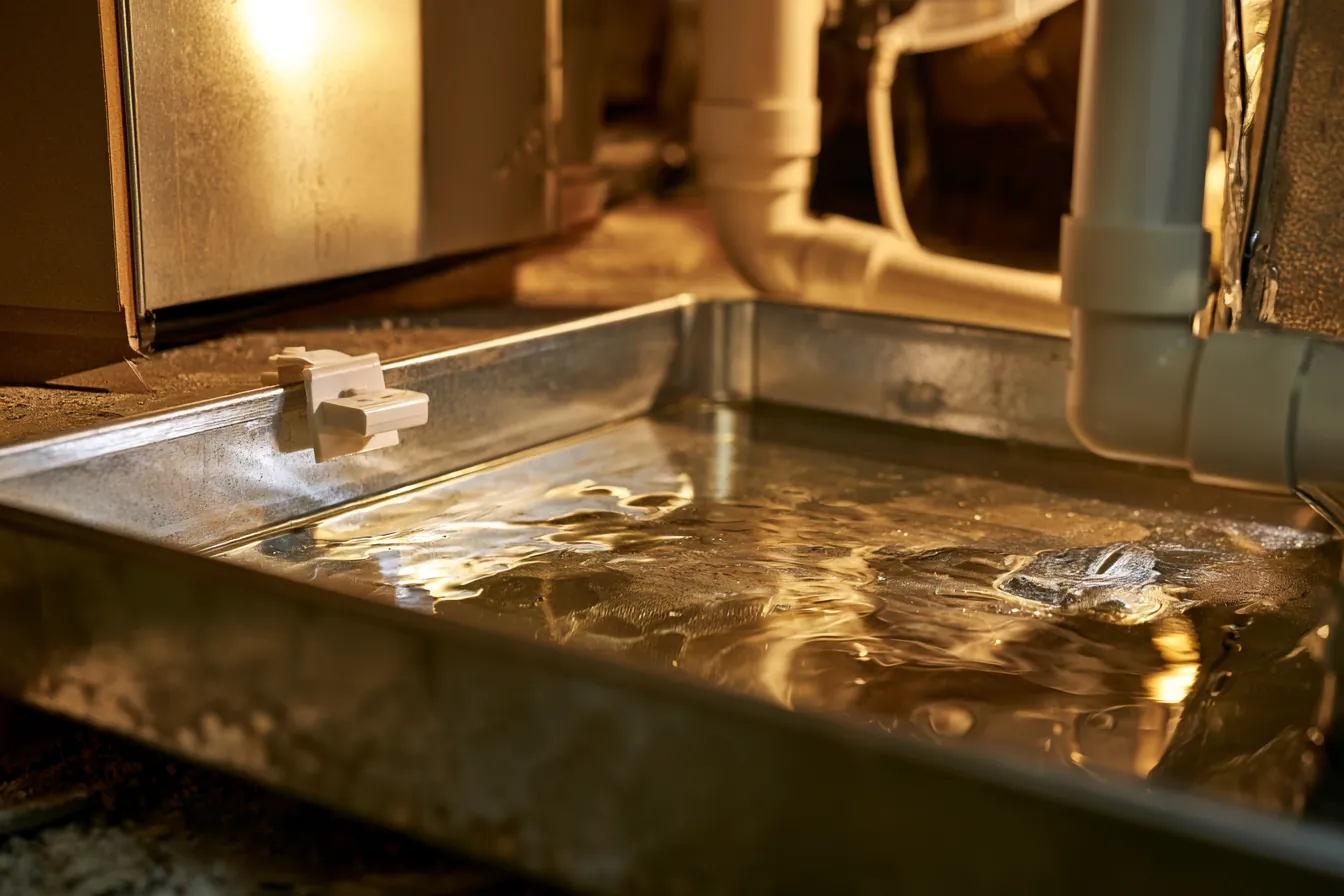
Carrier describes what technicians typically pull out of a clogged line: a dark mass of sludge made of algae, dust and mold [19]. Trane adds that the overflow switch can shut down the outdoor compressor, the condenser fan and the supply fan, so a clogged drain can look like the whole system died [10].
Your part is the visible check. Look for standing water in the pan under the air handler, water stains on a ceiling below an attic unit, and whether water drips from the drain line's outdoor end while the system runs. ENERGY STAR includes the condensate drain in routine maintenance [7]. Clearing the clog and testing the switch is service work, and it's part of an AC maintenance visit.
Does salt air near the beach affect AC cooling in Boca Raton?
It can. Salt air corrodes the outdoor condenser coil, the part that releases your home's heat outside, and a coil that can't shed heat makes the system run longer and cool less. Carrier notes that salt water can be carried as far as two miles inland, so homes within about two miles of the Atlantic in Boca Raton, Delray Beach and Deerfield Beach are the most exposed [20].
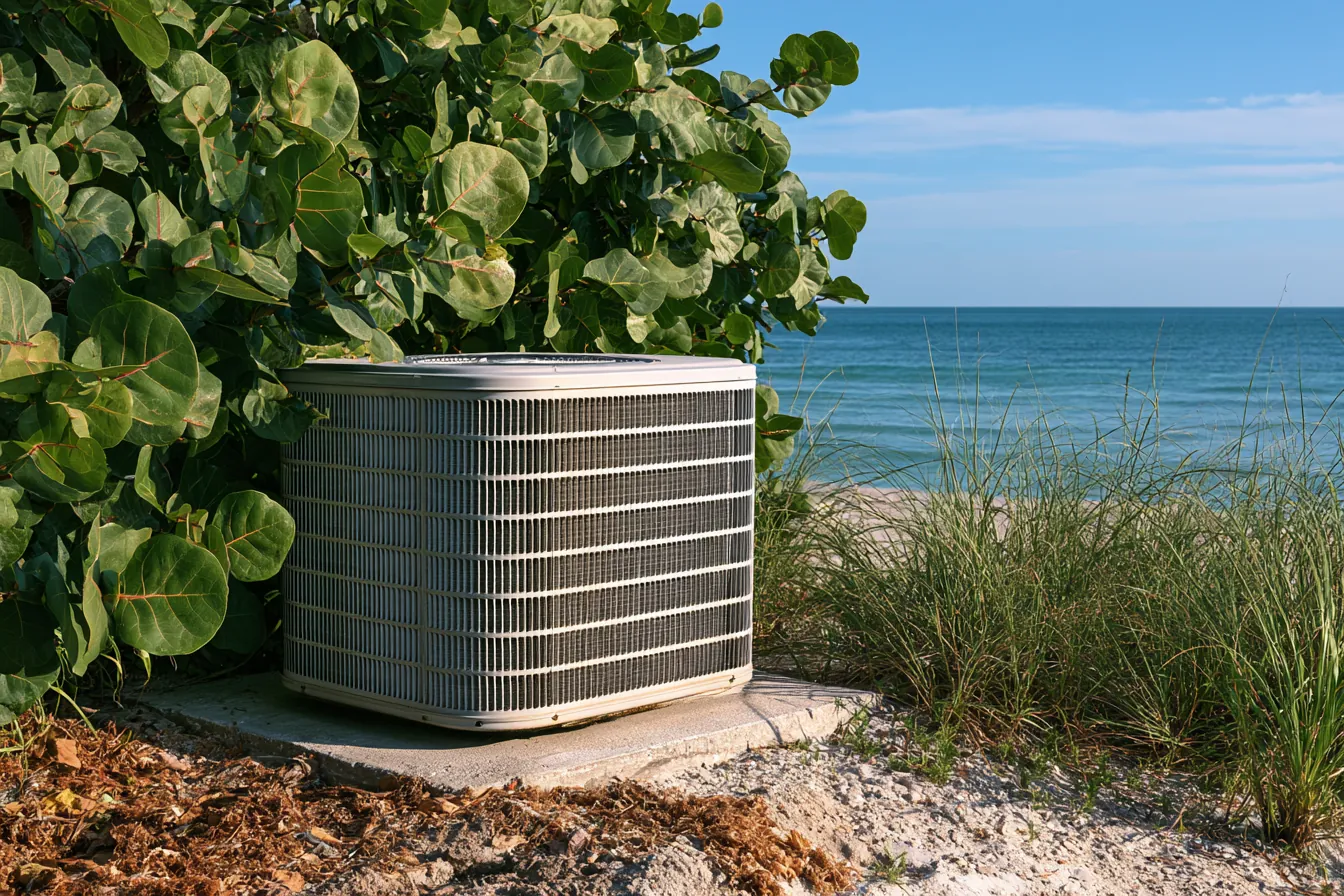
Carrier says the severity depends on distance from the ocean, wind direction, humidity and local contaminants [20]. That's a manufacturer statement, not a measured map of Palm Beach County, so treat two miles as a guide rather than a line.
For coastal homes, keep plants away from the outdoor unit and have the condenser coil inspected during routine maintenance. At replacement time, ask about coastal-rated equipment, which Carrier says homes within that range may benefit from [20]. See our Boca Raton and Delray Beach area guides.
When is an AC that is running but not cooling an emergency?
Treat it as an emergency when the house is getting hot and someone at risk lives there (an older adult, an infant, someone with a medical condition, or pets), or when you see a safety sign: a burning smell, a breaker that trips again, buzzing from the outdoor unit, or water spreading from the air handler. Turn the system off and call for emergency service.
The National Weather Service defines the heat index as how hot it really feels when humidity is factored in with the air temperature, and its Miami office notes that 96 degrees at 65% humidity feels like 121 [21]. For a vulnerable person, a hot house is a safety problem. Not a comfort one.
Call right away for any of these:
- A burning or electrical smell from a vent or the outdoor unit
- A breaker that trips again after one reset (Trane advises against flipping it at all [8])
- Humming from the outdoor unit with the fan not spinning [9]
- Ice on the refrigerant lines, or water spreading from the air handler
- Indoor temperature still climbing with a vulnerable person in the house
Direct Cooling's dispatch line, (561) 210-7605, takes calls and texts 24/7. See 24/7 emergency AC repair.
Should I repair or replace an AC that runs but won't cool?
Repair it when the fault is a part, a clog or a leak that can be found and fixed on an otherwise sound system. Consider replacement when the system is more than 10 years old, keeps losing refrigerant, or needs a major component. ENERGY STAR suggests considering replacement for air conditioners and heat pumps more than 10 years old [22].
The EPA confirms you can keep repairing an existing system, including replacing a compressor or condensing unit [13]. With half of Boca Raton's housing units built in 1983 or earlier [3], the honest answer depends on what the diagnosis finds.
What makes a repair bigger or smaller is predictable, even without a price list:
- The part: a capacitor or control is a smaller job than a coil or a compressor.
- The leak: finding and repairing a refrigerant leak takes longer than a part swap, and a leak in an aging coil may not be worth chasing.
- The ducts: a new system on leaky ducts inherits the same losses [16].
Direct Cooling is an American Standard Customer Care Dealer and a Rheem Pro Partner, so we can recommend new equipment when it makes sense and a repair when it doesn't. Our AC replacement and heat pump pages cover the options.
How do I keep my AC from losing its cooling next summer?
Keep air moving and keep the system serviced. Check the filter every month, keep the outdoor unit clear, keep vents and returns open, and schedule maintenance before the June-to-September heat arrives. The Department of Energy says routinely replacing or cleaning filters can lower an air conditioner's energy use by 5 to 15 percent [6].
ENERGY STAR's maintenance checklist lists what a professional visit should cover: tightening electrical connections, checking controls and the starting cycle, cleaning the evaporator and condenser coils, checking the refrigerant level, and inspecting the condensate drain [7].
With 88% of West Palm Beach's 90-degree days falling between June and September [2], a spring tune-up catches a weak part or a slow drain before the peak. Our AC maintenance service and membership plan include scheduled tune-ups; indoor air quality covers filtration.
Who can fix an AC that's running but not cooling in Boca Raton?
Call a licensed Florida air conditioning contractor. Direct Cooling is a family-run Boca Raton company founded in 2017 by Francisco "Frank" Rey, who had more than 20 years in HVAC before starting it, and licensed as a Florida Certified Air Conditioning Contractor (CAC1819111). Call or text (561) 210-7605; the dispatch line is monitored 24/7. We diagnose first and recommend a repair whenever a repair is the right call.
We've been BBB A+ accredited since 2021 and are rated 4.9 on Google with more than 360 reviews. We serve Boca Raton, West Boca Raton, Delray Beach, Boynton Beach, Lake Worth, West Palm Beach, Deerfield Beach, Parkland and Coral Springs. See the full service area or our FAQ.
Save the number before the next heat wave, run the six safe checks, and leave anything behind a panel to a licensed technician.
References
- U.S. Department of Energy, Building America (Springer, D. and Dakin, B.). Measure Guideline: Air Conditioner Diagnostics, Maintenance, and Replacement. March 2013. www1.eere.energy.gov/buildings/publications/pdfs/building_america/meas...
- NOAA National Centers for Environmental Information. U.S. Climate Normals 1991-2020, West Palm Beach International Airport (USW00012844), monthly and hourly normals. 2021. ncei.noaa.gov/data/normals-monthly/1991-2020/access/USW00012844.csv...
- U.S. Census Bureau. American Community Survey 2020-2024, Table B25035, Median Year Structure Built, Boca Raton city (via Census Reporter). 2025. api.censusreporter.org/1.0/data/show/latest?table_ids=B25035&geo_i...
- Trane. Why Isn't My Air Conditioner Working? Your Common Cooling Problems Answered. trane.com/residential/en/resources/blog/why-isnt-my-air-conditioner-wo...
- Florida Power & Light. ON or AUTO: Which A/C Setting Is Best? fpl.com/blog/ask-the-expert/ac-settings.html
- U.S. Department of Energy. Energy Saver 101: Home Cooling. energy.gov/sites/prod/files/HomeCooling101-final.pdf
- ENERGY STAR. Maintenance Checklist. energystar.gov/saveathome/heating-cooling/maintenance-checklist
- Trane. AC Not Turning On? Troubleshooting. trane.com/residential/en/resources/troubleshooting/air-conditioners/ac...
- Trane. AC Fan Not Working. trane.com/residential/en/resources/troubleshooting/air-conditioners/ac...
- Trane. HVAC Air Handler Overflow Switch. trane.com/residential/en/resources/troubleshooting/air-handlers/hvac-a...
- American Standard (Fonda, A.). Got a Frozen Evaporator Coil? Don't Panic, Do This. June 30, 2026. americanstandardair.com/resources/blog/frozen-evaporator-coil-dont-pan...
- U.S. Environmental Protection Agency. Section 608 Technician Certification. epa.gov/section608/section-608-technician-certification-0
- U.S. Environmental Protection Agency. Frequent Questions on the Phasedown of Hydrofluorocarbons. epa.gov/hfcs/frequent-questions-phasedown-hydrofluorocarbons
- U.S. Environmental Protection Agency. Fact Sheet: Leak Repair Requirements for Appliances Containing Hydrofluorocarbons and Certain Substitutes. January 2026. epa.gov/system/files/documents/2026-01/er-r-fact-sheet-leak-repair-202...
- Florida Building Commission. 2023 Florida Building Code, Energy Conservation, Chapter 4, R403.7.1 Equipment Sizing. 2023. up.codes/viewer/florida/fl-energy-conservation-code-2023/chapter/RE_4/...
- ENERGY STAR. Duct Sealing. energystar.gov/saveathome/heating-cooling/duct-sealing
- Cummings, J. and Withers, C., Florida Solar Energy Center. Problems Related to Air Handler Leakage. ASHRAE Journal, January 2008. publications.energyresearch.ucf.edu//wp-content/uploads/2018/06/FSEC-G...
- Carrier. What Is AC Short Cycling? carrier.com/us/en/residential/hvac-resources/air-conditioners/ac-short...
- Carrier. How to Clean an AC Drain Line. carrier.com/us/en/residential/hvac-resources/air-conditioners/how-to-c...
- Carrier. Coastal Heating and Air. carrier.com/us/en/residential/hvac-resources/coastal-heating-and-air/...
- National Weather Service Miami-South Florida. Heat Safety and Heat Index. weather.gov/mfl/heat
- ENERGY STAR. When to Replace Heating and Cooling Equipment. energystar.gov/saveathome/heating-cooling/replace
All sources accessed October 7, 2026.