
Ductless Mini Splits in Boca Raton for Rooms Central AC Misses
Mini split installation in Boca Raton solves a specific problem: a space your central AC cannot reach or cannot keep comfortable. A wall-mounted indoor head conditions the room directly, connected to a small outdoor unit through a hole about three inches across, with no new ductwork in a hot attic. We size it to the room, drain it so it does not drip, and permit it.
- 4.9 on Google, 360+ reviews
- FL license CAC1819111
- BBB A+ accredited
A Garage Gym, a Florida Room or the Bedroom That Never Cools
If you turned the garage into a gym or an office, enclosed the patio, added a room, or have one bedroom over the garage that stays four degrees warmer than the rest of the house, you have probably been told to extend the ductwork or buy a bigger system. Often neither is the right answer. The central system was sized without that space, and stretching it to reach one more room can leave the whole house worse off.
A ductless mini split adds capacity exactly where it is missing. ENERGY STAR lists the places it fits best, and they read like a list of Boca Raton remodels: additions and outbuildings such as garages where extending ductwork is difficult, rooms next to unconditioned spaces where ducts would be exposed to harsher temperatures, with a guest room above a garage as its example, and any home with hot or cold spots, including rooms used as home offices.
Because a mini split cools directly from the indoor head, it also skips the ductwork that loses so much cooling in a Florida attic. ENERGY STAR notes that duct losses can account for more than 30 percent of a home's energy use for space conditioning. For a room the duct system never served well in the first place, that is the difference between a fix and a workaround.
There are cases where ductless is the wrong tool, and we say so. If the hot room sits on an otherwise healthy duct system, the cause may be a crushed run, a disconnected boot or a leaking return, and a duct repair can cost less than new equipment. We test the airflow first.
Mini Split or Extend the Ductwork?
The answer depends on the space and on how much capacity your current system has left. These are the situations we see most in Boca Raton homes.
| Situation | Usually better | Why |
|---|---|---|
| Converted garage, workshop or gym | Mini split | Only a roughly 3-inch hole through the wall is needed for the line set (ENERGY STAR), and the main system stays balanced |
| Addition when the main system is at capacity | Mini split | Adds capacity instead of stretching a system that is already fully loaded |
| Enclosed patio or Florida room with lots of glass | Mini split | A high-heat-gain room gets its own capacity and its own thermostat |
| Bedroom above the garage | Mini split or duct fix | ENERGY STAR names it as a classic mini split case; a long or crushed duct run can also be the cause |
| One hot room on an otherwise fine system | Test first | A duct or airflow fix may solve it for less; we measure before recommending equipment |
| Home with no ductwork at all | Multi-zone mini split | Avoids duct losses that ENERGY STAR says can exceed 30% of space-conditioning energy |
What Kind of Mini Split Fits the Room?
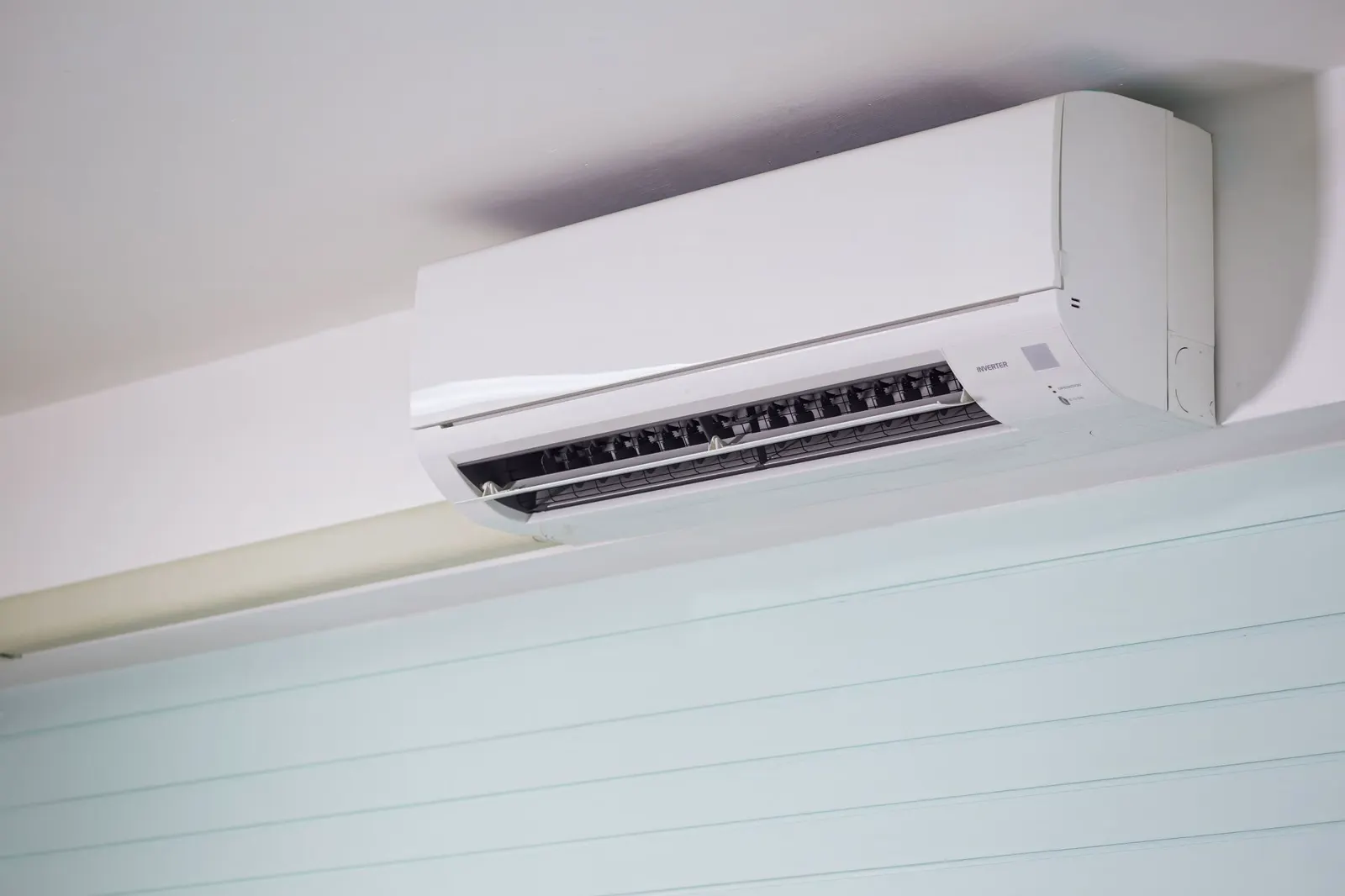
Most people picture a white head high on a wall, but ENERGY STAR lists four styles. The right one depends on the ceiling, the wall space and how visible you want the equipment to be.
- Wall-mounted headThe most common and usually the simplest install. It needs clear wall space near the top, away from curtains and tall furniture that block airflow.
- Ceiling cassetteSits flush in the ceiling and throws air in several directions. Needs open space above the ceiling to fit, so it depends on how the room is framed.
- Floor-mounted consoleLow on the wall like a radiator. Useful under windows or in rooms with sloped ceilings.
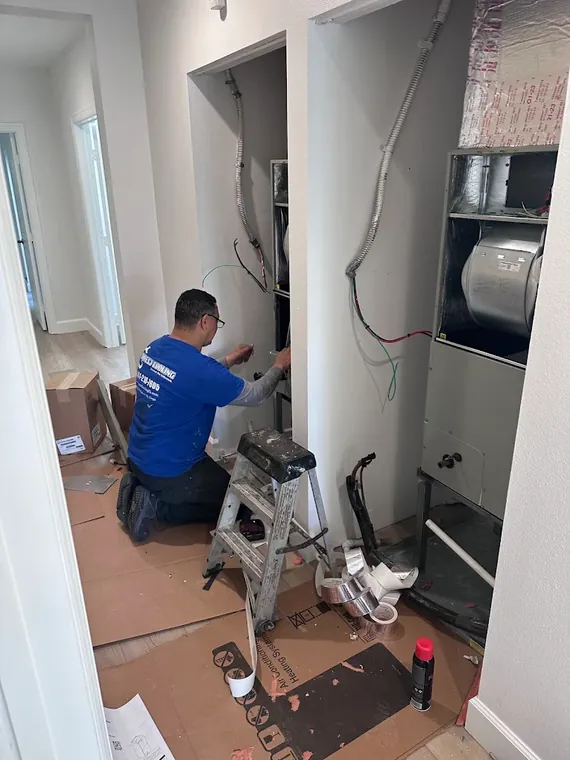
- Concealed ducted unitA compact air handler hidden in a soffit or closet feeding a few short ducts. Quiet and out of sight, at the cost of a little more installation work.
How a Ductless Mini Split Installation Works
The order of work is the same whether the system has one head or four. Multi-zone systems and installs that need a new electrical circuit simply take longer.
Size it to the room
Capacity comes from the room's actual heat gain: glass, orientation, insulation and how the space is used. In our humidity, an oversized head cools fast, shuts down and leaves the room clammy.
Place the head and the outdoor unit
The head goes where its airflow reaches the whole room; the outdoor unit goes on a stand or pad with clearance, anchored for wind loads under Florida Mechanical Code 301.15.
One small wall penetration
A hole about three inches across (ENERGY STAR) carries the refrigerant lines through the wall, typically bundled with the power cable and condensate drain, then gets sealed against water and insects.
Route the drain with real fall
The drain line gets continuous slope to the outside, or a condensate pump where gravity cannot do the job. Trane notes a head tilted forward or a drain without proper slope will drip.
Vacuum, charge and test
The line set is pressure-tested and evacuated before the refrigerant is released, then temperatures and airflow are checked in both cooling and heating.
Permit and inspection
Florida Statute 553.79 requires a permit to install or alter building systems, and a new mini split is permitted work. We pull the permit and schedule the inspection.

Why Mini Splits Leak Water, and How a Good Install Prevents It
A mini split in Palm Beach County pulls a surprising amount of water out of the air. NOAA's 1991-2020 normals for West Palm Beach show average summer dew points of roughly 72 to 74°F, and every hour the head runs in cooling, that moisture condenses on its coil, drips into a small pan and has to leave through a drain line no thicker than a garden hose.
Trane lists five causes of a mini split dripping water: a dirty filter, a clogged drain line, a damaged drain pan, a refrigerant problem, and improper installation. The first and fourth work the same way: restricted airflow or low refrigerant lets the coil freeze, and the ice melts into more water than the pan can handle. The clogged line backs water into the head until it spills onto the wall. Rusted or cracked pans show up on older units. And a head mounted with a forward tilt, or a drain with too little slope, will leak from the day it is installed.
That last cause is the one an installer controls completely, which is why the drain gets as much attention as the refrigerant lines on our installs. A useful clue from Trane if yours is dripping: a mini split should not leak water in heat mode, because it only produces condensation while cooling. Water during heating points to something else, and it is worth a call.
Single-Zone or Multi-Zone Mini Split?
A single-zone system pairs one outdoor unit with one indoor head. A multi-zone system connects several heads to one outdoor unit, each with its own control (Trane). Here is how they compare in practice.
| Single-zone | Multi-zone | |
|---|---|---|
| Best for | One room: a garage, addition, Florida room or problem bedroom | Several rooms, or a home with no ductwork |
| Outdoor units | One per room served | One outdoor unit for several heads |
| Control | One thermostat or remote | Each head has its own control |
| If the outdoor unit fails | Only that room loses cooling | Every room on that unit loses cooling |
| Sizing risk | Matched to one room's load | Easier to oversize; each head must match its own room |
| Typical project | A single added or problem room | A multi-room addition or a home without ducts |
Keeping a Mini Split Clean in Our Humidity
Ductless systems have no central filter, so each head's filter is the first line of defense. Trane lists water leaks, mold and mildew, musty smells and poor cooling among the problems a clogged filter causes.
Safe to do yourself
- Wash the filters oftenTrane suggests cleaning them as often as every two weeks in peak season and about monthly with lighter use: power off, vacuum on low, wash in lukewarm water and let them dry fully before reinstalling.
- Wipe the headA damp cloth on the outside of the unit keeps dust from building up (Trane).
- Keep the airflow clearNo curtains, bookcases or picture frames crowding the indoor head.
- Clear the outdoor unitTwo feet of clearance on all sides; rinse the coil gently with a garden hose, never high pressure, because the fins bend easily (Trane).
Stop and call a pro
- Water dripping from the headUsually a drain, pan or slope problem; the line and pan need a professional look.
- Musty smell or dark buildup on the blower wheelNeeds a professional cleaning of the coil, blower and pan, which means partly dismantling the head.
- Refrigerant and electrical workRequires EPA Section 608 certification; Trane notes refrigerant leaks are especially common at flare connections.
- Twice-a-year serviceTrane recommends professional service before cooling season and before heating season for a ductless heat pump; once a year may suffice for cooling-only.
Mini Split Refrigerants, Ratings and Life Span in 2026
New ductless systems moved off R-410A along with the rest of the residential market. Since January 1, 2025, new residential AC and heat pump systems must use refrigerant under EPA's 700 global warming potential limit. Rheem chose R-454B as its primary refrigerant and notes that some products, such as mini splits, may use R-32. On EPA's reference table R-32 has a GWP of 675 and R-454B 465, against 2,088 for R-410A. Both are A2L refrigerants, which EPA's SNAP program classifies as lower toxicity and lower flammability and approves with use conditions.
If you already own an R-410A ductless system, nothing changes for you. EPA says its rules do not limit using or repairing installed equipment. The refrigerant on the outdoor unit's label matters when you add a zone or replace a head, because heads and outdoor units must be matched.
On efficiency, ENERGY STAR says certified mini split heat pumps use compressors and fans that adjust speed, and that a certified heat pump can deliver up to three times more heat energy than the electricity it uses. Most current mini splits are heat pumps, so the same head that cools all summer can take the chill off a January morning. The U.S. Department of Energy's Home Cooling 101 guide lists a 12 to 15 year life span for ductless mini splits; clean filters, a clear drain and two service visits a year push toward the longer end.
Permits, Wind Rules and Recent Mini Split Work in West Boca
A mini split is a permanent mechanical system, and Florida treats it that way. Here is what applies locally, and where we have installed one most recently.
A permit is required
Florida Statute 553.79 makes it unlawful to install or alter a building system without a permit. The contractor pulls it, and the work is inspected.
Anchored for wind
Outdoor units must resist wind loads under Florida Mechanical Code 301.15. Broward County properties, including Coral Springs, Parkland and Deerfield Beach, fall in the High-Velocity Hurricane Zone with stricter rules than Palm Beach County.
Condos need association approval
A condo install needs a wall penetration and a spot for the outdoor unit, so most associations must approve it first. Tell us the building and we will work within its rules.
Our most recent permitted install
Palm Beach County records show a 2026 permit under our license for a new mini split in Johns West, a west Boca community built from 2024 to 2026. Even new homes add ductless zones.
Ductless Installation and Repair From Direct Cooling
Direct Cooling is a family-run Boca Raton contractor working from Boca Commerce Park, licensed as a Florida certified air conditioning contractor (CAC1819111).
- We repair what we did not installLeaking heads, frozen coils, refrigerant leaks and heads that stop cooling, regardless of who installed the system.
- Diagnose before equipmentFrank Rey founded the company in 2017 after more than 20 years in HVAC and trains every technician to diagnose first and sell second, which includes testing whether a duct fix beats a new head.
- Two manufacturers' optionsAs a Rheem Pro Partner and an American Standard Customer Care Dealer, we can compare equipment from more than one manufacturer for your space.
- Covered by membershipDuctless heat pumps get the same two visits a year under the membership plan, timed before cooling and heating seasons.
Where We Handle Mini Splits and Ductless
Ductless installs and repairs across south Palm Beach County and north Broward. Tap a pin for the city.
The interactive map is not loading right now. The areas it covers:
Mini Splits and Ductless by area
Mini Split Questions We Get Asked
 Direct CoolingFL Certified AC Contractor CAC1819111 Dispatch 24/7
 Hi, this is Direct Cooling. Tap a question below for a straight answer.
Tap a question to ask
- Do you repair mini splits too?
- Yes. We service and repair ductless systems, including ones we did not install: drainage problems, leaking heads, refrigerant leaks, frozen coils and heads that stop cooling. Text a photo of the outdoor unit's label and describe what the head is doing, and the technician can arrive with the right parts.
- Can one outdoor unit serve several rooms?
- Yes. A multi-zone system runs several indoor heads from one outdoor unit, and each head has its own control. The trade-off is that every room on that unit loses cooling if the outdoor unit fails, so for one or two rooms, separate single-zone systems are sometimes the more robust choice.
- Why is my mini split leaking water?
- Trane lists five causes: a dirty filter, a clogged drain line, a damaged drain pan, a refrigerant problem that freezes the coil, and improper installation, such as a head tilted forward or a drain without enough slope. Turn the unit off if water is reaching the wall or floor, clean the filters, and call if it continues.
- Why does my mini split smell musty?
- Usually moisture and growth on the filter, coil, blower wheel or drain pan inside the head. Trane lists mold, mildew and musty smells among the problems a clogged filter causes. Washing the filters helps, but buildup on the blower wheel and pan needs a professional cleaning that partly dismantles the head.
- Do I need a permit to install a mini split in Florida?
- Yes. Florida Statute 553.79 requires a permit to install or alter a building system, and a ductless mini split is permitted mechanical work. The licensed contractor should pull the permit in their own name and schedule the inspection. Condo owners usually need association approval as well.
- How often should a mini split be serviced?
- Trane recommends professional service twice a year for a ductless heat pump, once before cooling season and once before heating season, and says once a year may suffice for a cooling-only system. Between visits, clean the filters every two to four weeks depending on use.
- Can I put a mini split in my condo?
- Often, yes. The install needs a small penetration through an exterior wall and an approved location for the outdoor unit, so most condo associations must sign off first, and some limit where equipment or condensate lines can go. Share the association's rules with us and we will plan the install around them.
Have a Room That Never Cools?
Call or text (561) 210-7605 and tell us about the space. We will tell you whether a mini split or a duct fix is the better answer.
Related Services
Heat Pumps
One system for cooling and Florida's few cool nights, without a furnace.
Learn moreDuctwork
Duct repair, sealing and replacement for hot rooms, high bills and attic leaks.
Learn moreAC Installation
American Standard and Rheem systems, sized for your home and installed to current code.
Learn moreSources · page reviewed 2026-10-06
- ENERGY STAR, Mini-split heat pumps fact sheet (2024), read 2026-10-06
- Trane, Mini split leaking water: causes and solutions, read 2026-10-06
- Trane, Ductless system maintenance, read 2026-10-06
- Trane, Do mini splits have filters?, read 2026-10-06
- U.S. DOE, Energy Saver 101: Home Cooling infographic, read 2026-10-06
- NOAA NCEI, 1991-2020 hourly normals, West Palm Beach Intl (dew point), read 2026-10-06
- Rheem, What to know about the HVAC refrigerant change, read 2026-10-06
- EPA, Technology Transitions GWP reference table, read 2026-10-06
- EPA SNAP, substitutes in residential and light commercial AC and heat pumps, read 2026-10-06
- EPA, Frequent Questions on the Phasedown of HFCs, read 2026-10-06
- EPA, Section 608 technician certification, read 2026-10-06
- Florida Statutes 553.79, permits, read 2026-10-06
- 2023 Florida Mechanical Code, Chapter 3 (301.15 wind), read 2026-10-06
- Florida Building Code, High-Velocity Hurricane Zone definition, read 2026-10-06
- Palm Beach County ePZB permit search (contractor CAC1819111), read 2026-10-06
- Palm Beach County Property Appraiser parcel data, read 2026-10-06
- Rheem, 2025 Pro Partner contractor brochure, read 2026-10-06
- American Standard, Customer Care Dealers, read 2026-10-06