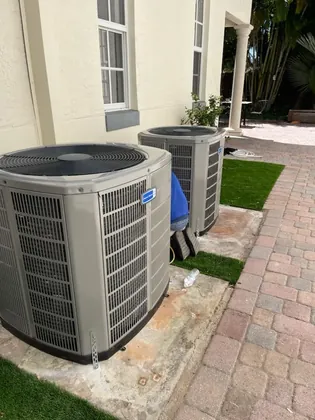

Heat strips cost per hour is a simple sum once you know the strip's size. Most Florida homes never think about it until a cold front comes through. Then the bill shows up.
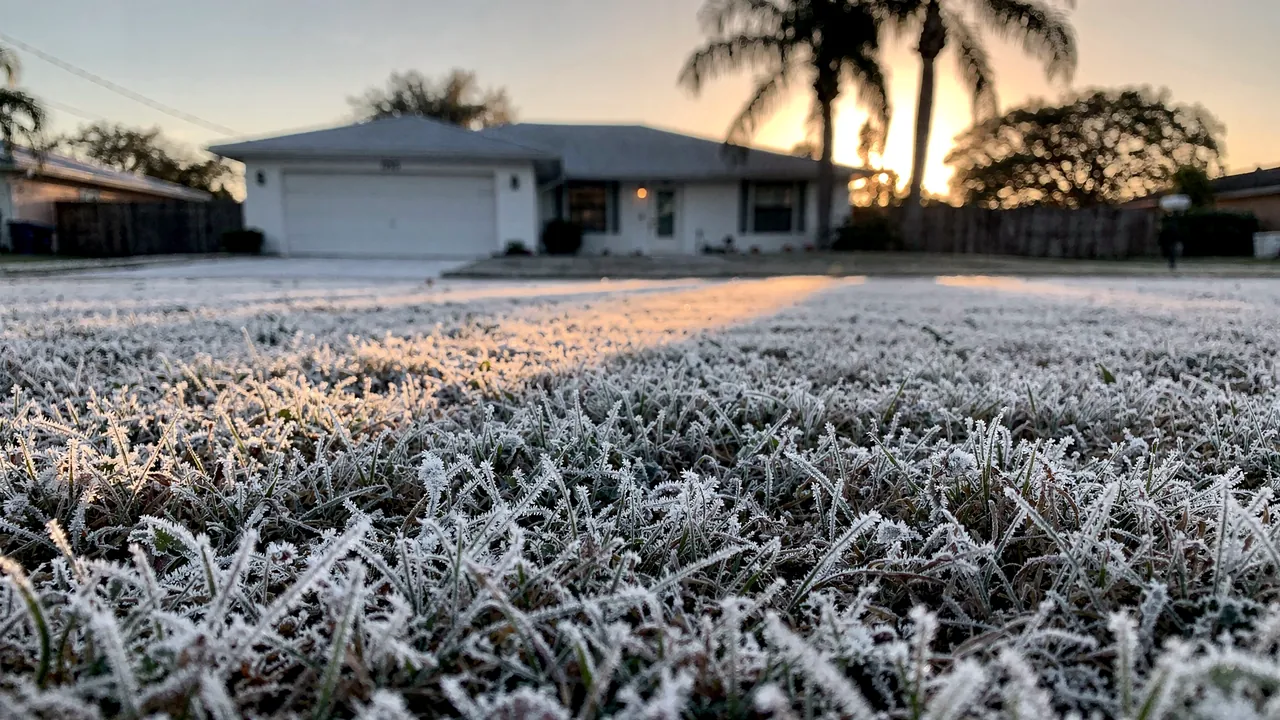
That happened last winter. Palm Beach International Airport recorded 30 F on two mornings in a row, February 1 and 2, 2026, the first time since 1989 [3]. On nights like that, a heat pump leans on its backup strips, and an all-electric home without a heat pump runs on strips alone.
Most Florida homes are in that group. The EIA counts 5.35 million Florida homes, 66 percent, that heat mainly with electricity [4].
This guide shows the arithmetic on the FPL rate, works through the February 2026 cold snap, explains why AUX is the expensive mode on a heat pump, and covers the thermostat habits that keep the strips off. Direct Cooling repairs heat pumps and heat strips across Boca Raton, but the numbers here come from the EIA, FPL, the National Weather Service and the Department of Energy.
Key takeaways
- One kWh of electric resistance heat is 3,412 Btu, so strips cost kilowatts times hours times the rate [1].
- At about 12.26 cents per kWh, a 10 kW strip costs about $1.23 an hour and about $9.81 for 8 hours, by our arithmetic [2].
- A heat pump can deliver up to three times more heat than the electricity it uses, so AUX and EM heat are the costly modes [5].
- FPL's own estimate: auxiliary heat used more than 12 hours a day can add up to $15 a day [6].
- Strips running all night, or a thermostat stuck on AUX? Call or text Direct Cooling at (561) 210-7605.
How Most Florida Homes Make Heat, and Why Strips Cost More
Two out of three Florida homes heat mainly with electricity, and only about one in twenty with natural gas. Electric heat comes from a heat pump, from resistance strips in the air handler, or from both. Strips make heat directly from electricity, one for one. A heat pump moves heat from outdoors, so it gets more heat from the same power.
The federal numbers set the scale. The EIA's 2020 survey counts 5.35 million Florida homes heating mainly with electricity and 0.42 million, 5 percent, with natural gas [4]. Those homes used 8.4 billion kWh for space heating that year [7]. That is about 1,570 kWh a year for each electrically heated home, by our arithmetic.
FPL puts the cost difference bluntly: "strip or electric resistance-based heating requires two to three times more energy than air conditioning" [6].
Strips come in standard sizes. Rheem's instructions for its H6HK electric heater kits list model codes for 5, 8, 9, 10, 15, 20, 25 and 30 kW, and note that the 20, 25 and 30 kW kits are not approved for its smallest A-cabinet air handlers [8]. In a heat pump system, the strip is the backup. In a straight AC with a heat strip, it is the only heat.
Local homes show both. A West Palm Beach change-out on our permit record lists a Rheem 2.5-ton system with a 5 kW electric heat strip; see AC repair in West Palm Beach. Gas heat is more common in a few places: 11.4 percent of homes in ZIP 33496, around the Polo Club, heat with utility gas; see AC repair at the Polo Club. In Parkland the share is about 13.8 percent; see AC repair in Parkland.
The Arithmetic: Kilowatts, Hours and the FPL Rate
Multiply the strip's kilowatts by the hours it runs to get kilowatt-hours, then multiply by the rate. FPL's October 2026 charges come to about 12.26 cents per kWh for the first 1,000 kWh in a month and about 14.26 cents above that. A cold snap that pushes a home past 1,000 kWh pays the higher rate on the extra.
FPL's October 2026 rate insert sets the price. For the first 1,000 kWh, the base energy charge is 7.865 cents, fuel is 2.893 cents and four clauses add 1.540 cents, less a 0.040 cent credit, about 12.26 cents in all [2]. Above 1,000 kWh, base and fuel rise to 8.865 and 3.893 cents, about 14.26 cents in all [2].
Here is the arithmetic for common strip sizes at the first-tier rate, with the same heat from a heat pump in the last column. The table is ours, and taxes are extra.
| Strip size | 1 hour | 4 hours | 8 hours | 12 hours | Same heat for 8 hours from a heat pump at COP 3 |
|---|---|---|---|---|---|
| 5 kW | About $0.61 [2] | About $2.45 [2] | About $4.90 [2] | About $7.35 [2] | About $1.63 [2] [9] |
| 8 kW | About $0.98 [2] | About $3.92 [2] | About $7.85 [2] | About $11.77 [2] | About $2.62 [2] [9] |
| 10 kW | About $1.23 [2] | About $4.90 [2] | About $9.81 [2] | About $14.71 [2] | About $3.27 [2] [9] |
| 15 kW | About $1.84 [2] | About $7.35 [2] | About $14.71 [2] | About $22.06 [2] | About $4.90 [2] [9] |
| 20 kW | About $2.45 [2] | About $9.81 [2] | About $19.61 [2] | About $29.42 [2] | About $6.54 [2] [9] |
A strip cycles on and off with the thermostat, so it rarely runs every minute of those hours. The table is the ceiling for each size.
FPL's own warning fits the same arithmetic. It says auxiliary heat used more than 12 hours a day can add up to $15 a day, an estimate it bases on a 7.5 kW strip running 12 to 16 hours a day [6] [10]. That is 90 to 120 kWh, about $11 to $15 at the first-tier rate, by our arithmetic [2].
Strips that run all night, or a thermostat stuck on AUX, are service calls. Call or text Direct Cooling at (561) 210-7605, or see our page on furnace and heat strip repair in Boca Raton.
A Worked Night: February 1 to 2, 2026 at 30 Degrees
On February 1 and 2, 2026, Palm Beach International Airport recorded a low of 30 F both mornings, the first time since 1989. The normal low for that date is 59 F. If a 10 kW strip ran 8 hours on each of those nights, it used about 160 kWh, roughly what an average Florida home uses for a week of August cooling.
The National Weather Service's winter summary for South Florida records the cold. "Palm Beach International Airport registering a low temperature of 30F on two consecutive mornings (February 1-2), the first such occurrence since 1989" [3]. The worst of it ran from January 27 to February 9, the coldest two-week average since 2010, about 10 to 11 degrees below normal [3].
Normal is much warmer. The 1991 to 2020 daily normals for Palm Beach International put the February 1 low at 59 F [11].
Now the bill. A 10 kW strip running 8 hours a night uses 80 kWh, about $9.81 at the first-tier rate [2]. Two nights come to about 160 kWh, roughly $19.61 [2].
For scale, the EIA's 2020 figures put an average Florida home with air conditioning at about 5,100 kWh a year of cooling [7] [12]. August carries 564 of West Palm Beach's 4,166 annual cooling degree days [13]. That works out to about 690 kWh of cooling in August, or about 155 kWh a week, by our arithmetic. Two 30-degree nights on strips use about as much as a week of August cooling.
The heating season here is short. All of January averages 75.6 heating degree days at West Palm Beach, against 559.5 cooling degree days in July [13]. The strips run a few nights a year, which is why the cost surprises people.
Heat Pump Versus Strips: Why AUX Is the Expensive Mode
A heat pump moves heat from outdoor air into the house, so it delivers more heat than the electricity it uses, often about three times as much. Strips make one unit of heat from one unit of electricity. AUX means the strips are helping the heat pump. EM, emergency heat, means the strips are running alone.
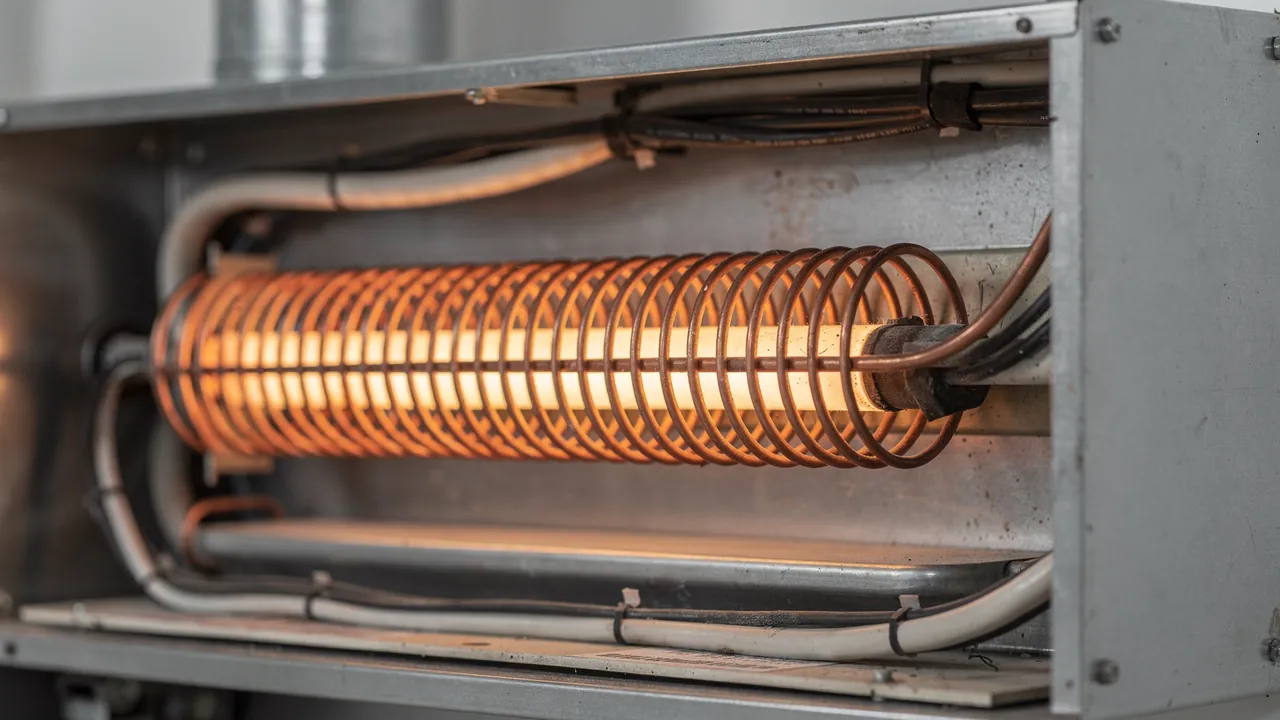
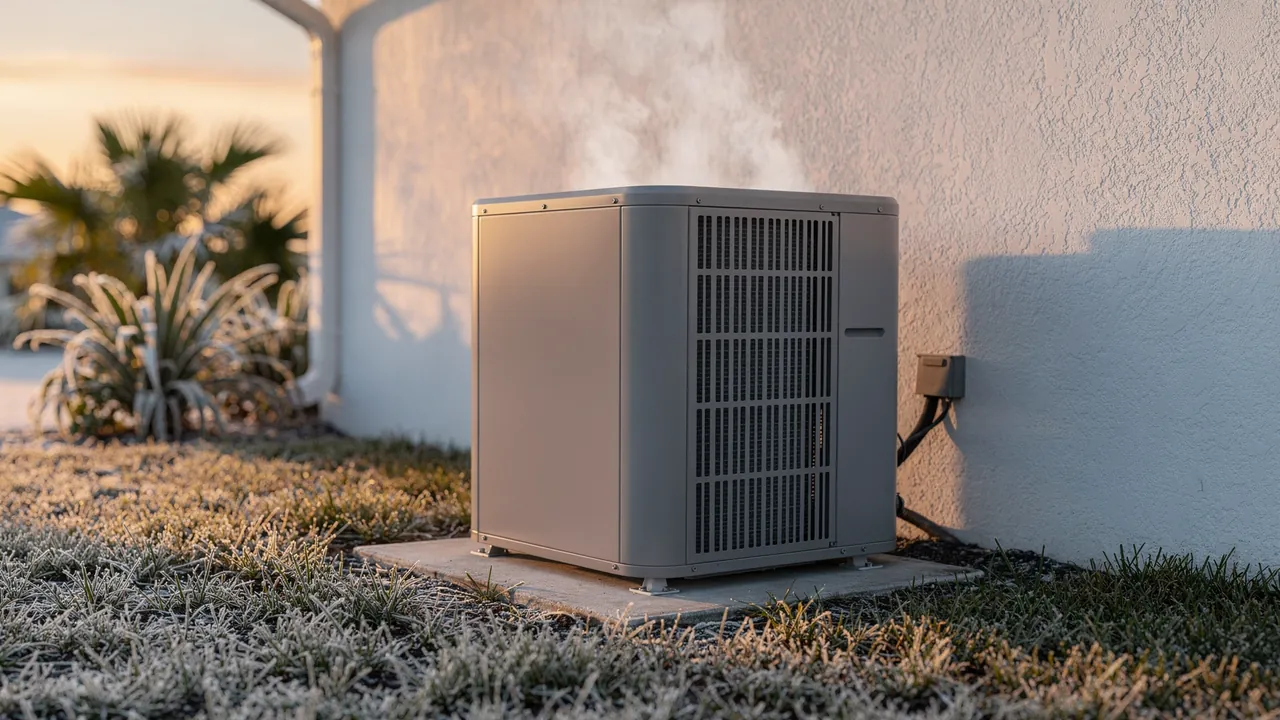
ENERGY STAR explains why. Because heat pumps move heat rather than converting it from fuel, an air-source heat pump "can deliver up to three times more heat energy to a home than the electrical energy it consumes" [5].
A guide from the Consortium for Energy Efficiency, hosted by the Department of Energy, puts numbers on it. An air-source heat pump "typically has a COP greater than 3 and can maintain a COP greater than 1.75 even at 5°F." By contrast, "electric resistance has a COP of 1" [9]. COP is heat out divided by energy in.
At a COP of 3, the heat a 10 kW strip makes in an 8-hour night would take about a third of the electricity from the heat pump: about 27 kWh, roughly $3.27 instead of $9.81, by our arithmetic [2] [9]. The heat pump's output falls as it gets colder, so on a 30-degree morning the strips may still have to help.
Some strip use is normal. The same guide says a defrost cycle typically takes 5 to 15 minutes, and that "auxiliary heating could activate to keep the temperature stable" [9]. AUX for a few minutes on a frosty morning is expected. AUX for hours on a mild morning is not.
Heat pumps with backup strips are common in places like Valencia, where a surprise electric bill on a cold morning often traces back to the heating side; see AC repair in Valencia. If you are replacing a straight AC with strips, compare heat pumps in Boca Raton.
Thermostat Habits That Keep the Strips Off
Set the heat at 68 or lower, raise it no more than two degrees at a time, and do not make big manual setbacks on a heat pump. A large jump in the setting is what calls the strips. FPL and the Department of Energy give the same advice, because the backup heat is the expensive part.

FPL's winter tips start with the setting: "Set your thermostat to 68 degrees or lower." Every degree below 68, it says, saves 5 percent on heating costs [6]. It adds, "Avoid raising your thermostat by more than two degrees at a time if you have a central electric-based heating system to prevent accidentally turning on auxiliary heat" [6].
The Department of Energy agrees for heat pumps. Its Energy Saver guide says not to set back a heat pump's thermostat manually if it causes the backup electric-resistance heat to come on, because that heat is more expensive [14]. For other systems, DOE says each 1 F of setback over an eight-hour period saves about 1 percent on heating bills [15].
Check the strips before you need them. In unincorporated Lake Worth, our advice is to check filters, drains and heat strips in November and December, before the first cool front; see AC repair in Lake Worth. Strips sit unused most of the year, so dust and worn parts tend to show up on the first cold morning. A burning smell that lasts, or a tripped breaker, is a service call. After a power outage, see our guide to restarting the system after an outage.
Questions About Heat Strip Costs
 Direct CoolingFL Certified AC Contractor CAC1819111 Dispatch 24/7
Hi, this is Direct Cooling. Tap a question below for a straight answer.
Tap a question to ask
- Is it cheaper to leave the heat on all night in Florida?
- For a heat pump, a steady setting is usually cheaper than a big setback and a big jump in the morning, because the jump can call the strips. The Department of Energy says not to set back a heat pump manually if it brings on the backup electric heat [14].
- What does EM heat mean on my thermostat?
- Emergency heat. It shuts off the heat pump and runs the electric strips alone, at a COP of 1 [9]. Use it only if the outdoor unit has failed, and call for service. Left on by mistake, it costs about three times as much as the heat pump for the same heat, by the guide's typical COP of 3 [9].
- How many kW are the heat strips in my air handler?
- Look at the rating label on the outside of the air handler or the heater kit's model number. Rheem's H6HK model numbers, for example, carry the size after the dash: 005 for 5 kW, 010 for 10 kW, 015 for 15 kW [8]. Do not open the panel; the strips run on high voltage. A technician can read it for you.
The Short Answer for the Next Cold Front
A heat strip costs kilowatts times hours times the rate. On FPL's first-tier charges of about 12.26 cents, that is about $1.23 an hour for a 10 kW strip and about $9.81 for 8 hours, by our arithmetic [2]. Two nights like February 1 and 2, 2026 can cost as much as a week of August cooling.
A heat pump does the same job for about a third of the power [5] [9]. So keep the setting at 68 or lower, raise it two degrees at a time, and treat AUX that runs for hours as a problem to fix.
Direct Cooling is a Florida Certified Air Conditioning Contractor, license CAC1819111, with our shop in West Boca Raton. Call or text (561) 210-7605 to check your heat strips before the next cold front.
References
- U.S. Energy Information Administration. Energy Explained: British thermal units (Btu), sample Btu conversion factors. No date shown; read November 15, 2026. eia.gov/energyexplained/units-and-calculators/british-thermal-units.ph...
- FPL. Residential Rates and Clauses, effective October 2026 (form 26-3817). Effective October 2026. fpl.com/content/dam/fplgp/us/en/rates/pdf/residential-rates-oct2026.pd...
- National Weather Service Miami-South Florida. South Florida Winter 2025-2026 Summary. March 19, 2026. weather.gov/media/mfl/news/WinterSummary2026.pdf
- U.S. Energy Information Administration. Residential Energy Consumption Survey 2020, Highlights for space heating fuel in U.S. homes by state. Released March 29, 2023. eia.gov/consumption/residential/data/2020/state/pdf/State%20Space%20He...
- ENERGY STAR. Air Source Heat Pumps. No date shown; read October 30, 2026. energystar.gov/products/air_source_heat_pumps
- FPL. Ways to Save: Energy Saving Tips. No date shown; read November 15, 2026. fpl.com/save/lower-bill/tips.html
- U.S. Energy Information Administration. Residential Energy Consumption Survey 2020, Table CE5.1.ST, household site electricity end-use consumption by state. Data release June 2023. eia.gov/consumption/residential/data/2020/state/pdf/ce5.1.st.pdf
- Rheem. H6HK Series Electric Heater Kits, installation instructions (form 708514B). Printed 09/06. files.rheem.com/LiteratureArchive/708514b.pdf
- Consortium for Energy Efficiency, hosted by U.S. DOE Building Science Education. You Installed an ASHP, Now What? File dated January 16, 2024; published September 27, 2024. bsesc.energy.gov/sites/default/files/2024-09/CEE_You_Installed_an_ASHP...
- FPL Newsroom. FPL offers customers ways to save energy during cold weather. January 30, 2026. newsroom.fpl.com/FPL-offers-customers-ways-to-save-energy-during-cold-...
- National Weather Service Miami. Daily Normals (1991-2020), Palm Beach International (USW00012844). PDF created July 20, 2022. weather.gov/media/mfl/climate/Daily%20Normals%20(1991-2020)%20-%20PBI....
- U.S. Energy Information Administration. Residential Energy Consumption Survey 2020, Highlights for air conditioning in U.S. homes by state. Final data release March 2023. eia.gov/consumption/residential/data/2020/state/pdf/State%20Air%20Cond...
- NOAA National Centers for Environmental Information. 1991-2020 monthly climate normals, West Palm Beach (station USW00012844), cooling and heating degree days. Read October 30, 2026. ncei.noaa.gov/access/services/data/v1?dataset=normals-monthly-1991-202...
- U.S. Department of Energy. Energy Saver: Tips on Saving Money and Energy in Your Home. August 2022. energy.gov/sites/default/files/2022-08/energy-saver-guide-2022.pdf
- U.S. Department of Energy. Energy Saver: Consumer Guide to Home Heating and Cooling. August 13, 2021. energy.gov/sites/default/files/2021-08/ES-HomeHeatingandCooling_081221...